What Age Should Children Start Piano Lessons?
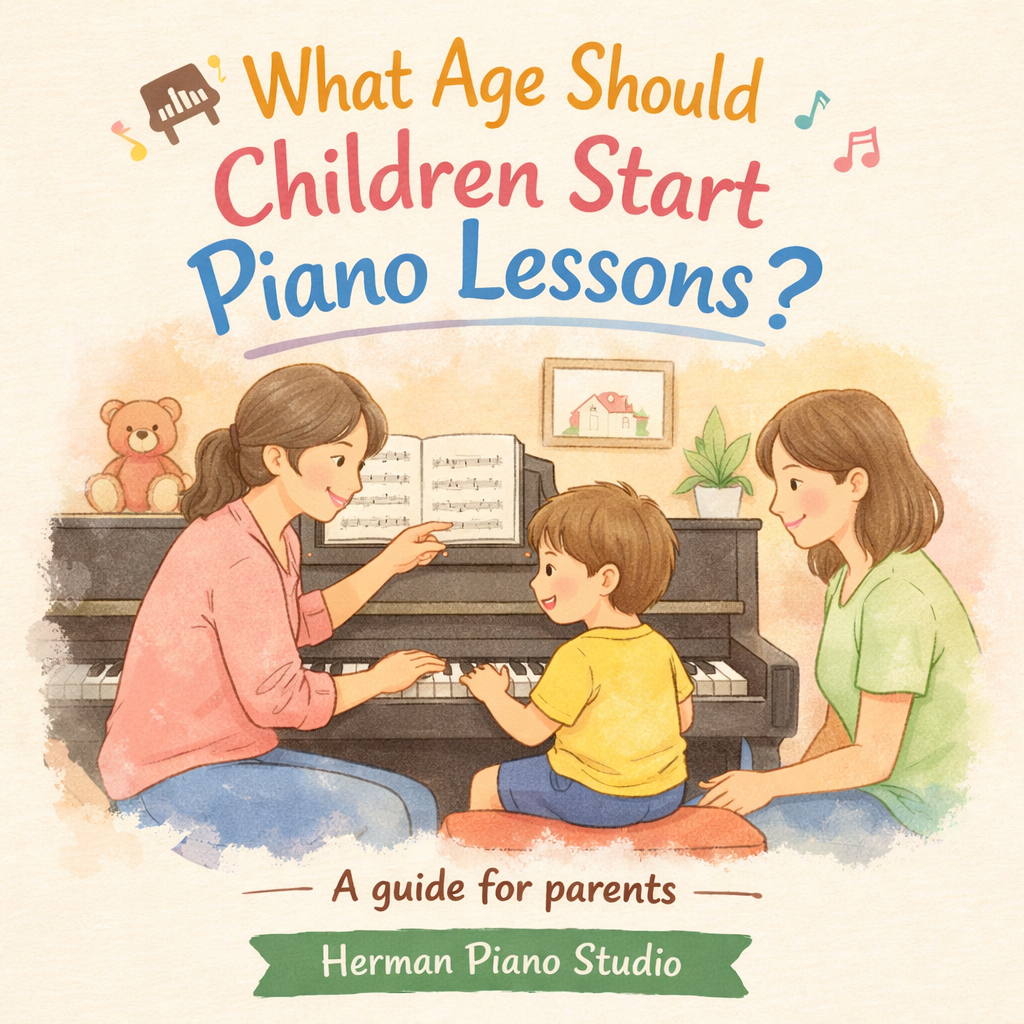
Many parents who are interested in piano lessons for children eventually ask the same question: What age should a child begin learning the piano?
It is a very common concern. Some parents worry that starting too early may overwhelm a child, while others fear that starting too late may make learning more difficult.
In reality, there is no single perfect age that works for every child. Each child develops differently in terms of attention span, motor coordination, and interest in music. However, experienced teachers generally agree that there is an ideal window during which children can begin learning the piano comfortably and successfully.
In this article, we will explore what age to start piano lessons, how to tell if a child is ready, and how parents can support their child’s musical development.
The Ideal Age Range to Start Piano
For most children, the ideal age to begin beginner piano lessons for kids is usually between 5 and 7 years old.
At this age, children typically have developed several important skills needed for learning the piano:
Basic reading ability
Improved finger coordination
Ability to focus for short periods
Willingness to follow instructions
Piano playing requires a combination of physical coordination and mental concentration. Young children need to learn how to move their fingers independently, read musical notation, and listen carefully to the sound they produce. Around age five or six, many children begin to develop the cognitive and physical readiness for these tasks.
That said, some children may be ready slightly earlier, while others may benefit from waiting until they are a little older. The most important factor is not simply age, but the child’s readiness and interest in music.
Parents often ask, “When should a child start piano?” The answer is that readiness matters more than the exact number of years.
Signs That a Child Is Ready for Piano Lessons
Rather than focusing only on age, it is helpful to look for certain signs that indicate a child may be ready for piano lessons for children.
1. Ability to Follow Simple Instructions
Piano lessons involve listening, observing, and responding to guidance from a teacher. If a child can follow simple directions and stay focused during a short activity, they are likely ready to begin.
2. Basic Finger Coordination
Children do not need perfect coordination, but they should be able to move individual fingers and control simple hand movements.
3. Interest in Music
A strong sign of readiness is curiosity about music. Some children enjoy listening to piano music, tapping rhythms, or experimenting with sounds on a keyboard.
4. Ability to Sit and Focus Briefly
A typical beginner lesson lasts between 30 and 45 minutes. Children who can sit and concentrate on a task for short periods usually adapt well to lessons.
If these qualities are present, a child will likely benefit from beginner piano lessons for kids.
Benefits of Starting Piano at a Young Age
Learning the piano offers many benefits beyond simply playing music. Starting early can help children develop skills that support their overall growth.
Cognitive Development
Music learning engages multiple areas of the brain. Studies have shown that musical training can strengthen memory, pattern recognition, and problem-solving abilities.
Improved Discipline and Focus
Piano practice teaches children how to work patiently toward gradual improvement. Over time, this builds concentration and persistence.
Emotional Expression
Music provides children with a creative outlet to express emotions and imagination. Playing a musical instrument allows them to communicate feelings through sound.
Confidence and Achievement
As children learn new pieces and techniques, they experience a sense of accomplishment. Performing music or passing graded exams can help build self-confidence.
These benefits are some of the reasons why many parents seek piano lessons for children at an early stage.
When It Might Be Better to Wait
While many children are ready to begin around age five or six, some may benefit from waiting another year or two.
A child might not yet be ready if:
They struggle to sit still for short periods
They show little interest in music
They become easily frustrated when learning new skills
Their hand coordination is still developing
In such cases, there is no harm in waiting. Starting piano at age seven, eight, or even later can still lead to excellent progress.
It is important to remember that musical ability develops over time. What matters most is a supportive learning environment and consistent guidance from a qualified teacher.
How Parents Can Support Early Piano Learning
Parents play an important role in helping children succeed when they begin piano lessons. You may download this checklist for effective practice at home here.
Encourage Regular Practice
Short and consistent practice sessions are far more effective than long, irregular ones. Even 10–15 minutes a day can build strong habits for beginners.
Create a Positive Environment
Children learn best when music is associated with enjoyment rather than pressure. Encouragement and patience can make a big difference.
Provide a Suitable Instrument
Having access to a piano or keyboard at home allows children to practice regularly. Even a simple digital piano can be sufficient for beginners.
Communicate With the Teacher
A good teacher will guide both the student and the parent. Regular communication helps ensure that the child is progressing comfortably and enjoying the learning process.
If you are looking for a piano teacher Singapore, it is helpful to find someone who understands child development and can tailor lessons appropriately.
Final Advice from a Piano Teacher
So, what age should children start piano lessons?
For most children, the ideal starting age is around 5 to 7 years old, when they have developed enough coordination and focus to begin learning effectively. However, every child is different, and readiness is more important than age alone.
With the right guidance, encouragement, and structured learning approach, children can develop a lifelong appreciation for music and the piano.
Interested in Piano Lessons?
If you are considering piano lessons for children, Herman Piano Studio offers structured and supportive instruction designed for young learners.
Lessons focus on developing strong piano technique, musical understanding, and confidence at the instrument. Students can also prepare for ABRSM piano examinations or simply enjoy learning music at their own pace.
Whether your child is just beginning or looking to pursue music more seriously, Herman Piano Studio provides lessons for beginners as well as dedicated students who wish to develop their skills further.
If you would like to learn more or enquire about lessons, feel free to reach out and begin your child’s musical journey today. 🎹
