Why Your Piano Practice Is Not Working (And How to Fix It Step-by-Step)
Introduction
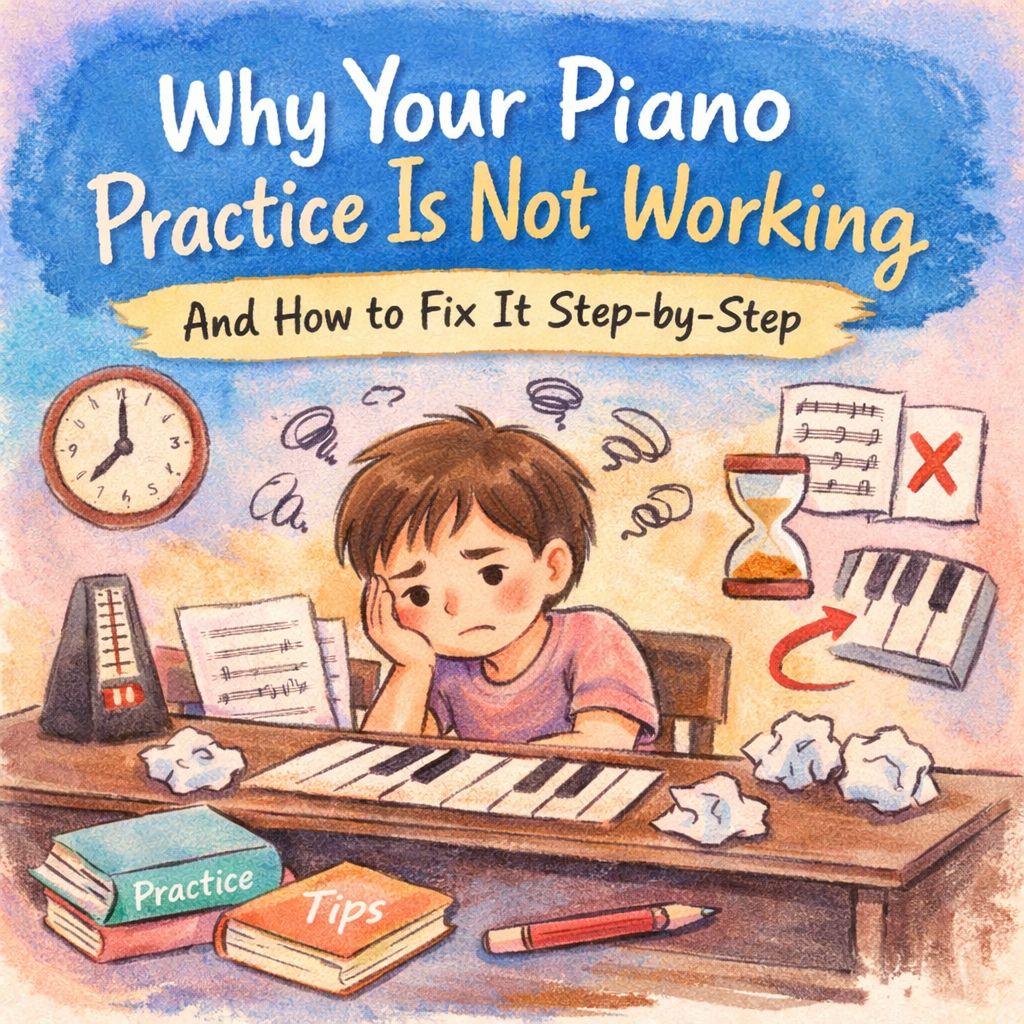
Many students spend time at the piano every week—but still feel like they are not improving.
You might hear comments like:
“I’ve been practising, but I’m not getting better.”
“This piece still sounds the same after many days.”
“Practice feels frustrating and unproductive.”
This is a very common issue among students taking piano lessons for beginners, as well as more advanced learners.
The truth is, not all practice leads to improvement. In fact, ineffective practice can actually slow down progress.
In this article, we will explain why your piano practice may not be working—and more importantly, how to fix it using practical and proven piano practice tips.
What Does “Ineffective Practice” Look Like?
Before solving the problem, it’s important to recognise the signs.
Your practice may not be working if you:
Keep repeating the same mistakes
Feel stuck on the same section for days
Play through pieces without improvement
Practise without a clear goal
If this sounds familiar, don’t worry—this is not a talent issue. It simply means your practice method needs adjustment.
Why Piano Practice Often Fails
1. Playing Instead of Practising
Many students “play” their pieces from start to finish instead of actually practising.
The difference:
Playing = performing what you already know
Practising = improving what you cannot do yet
Real improvement comes from focusing on weaknesses, not repeating strengths.
2. Lack of Clear Focus
Sitting at the piano without a clear plan leads to unfocused practice.
Without a goal, students often:
Jump between sections
Repeat the same mistakes
Lose concentration
Effective practice always has a specific objective.
3. Practising Too Fast
Trying to play at full speed too early causes:
Mistakes
Tension
Loss of control
This is one of the most common issues in beginner piano lessons.
4. Avoiding Difficult Sections
Students naturally prefer playing parts they are comfortable with.
However, avoiding difficult sections means:
Weak areas remain weak
Overall progress slows down
5. Lack of Feedback
Practising without feedback can reinforce mistakes.
Without guidance from a teacher or careful listening, students may not realise what needs improvement.
How to Fix Your Piano Practice (Step-by-Step)
Step 1: Set a Clear Goal for Each Session
Before you start, decide:
What exactly are you improving today?
Examples:
Fix rhythm in a specific section
Improve left-hand accuracy
Smooth out transitions
This transforms practice into focused learning.
Step 2: Work in Small Sections
Instead of playing the entire piece:
Practise 2–4 bars at a time
Repeat until accurate
Gradually connect sections
This is one of the most effective piano practice tips used by professionals.
Step 3: Practise Slowly and Accurately
Slow practice allows you to:
Control each note
Maintain correct fingering
Avoid mistakes
Once accuracy is achieved, increase speed gradually.
Step 4: Use Hands-Separate Practice
If coordination is difficult:
Practise right hand alone
Practise left hand alone
Combine only when both are secure
This builds confidence and clarity.
Step 5: Listen Actively
Always ask yourself:
Does this sound even?
Is the rhythm steady?
Are dynamics clear?
Listening is a key part of learning how to learn piano effectively.
Step 6: Repeat Correctly, Not Repeatedly
Repetition only works if done correctly.
Practising mistakes repeatedly reinforces them.
Focus on:
👉 Correct repetition = improvement
👉 Incorrect repetition = bad habits
Practical Piano Practice Tips
1. Use a Timer
Divide your session into sections:
Technique
Problem areas
Full playthrough
This keeps practice structured.
2. Practise Difficult Parts First
Your focus is strongest at the beginning of practice.
Use this time for challenging sections.
3. Record Yourself
Listening to recordings helps identify mistakes you may not notice while playing.
4. Keep Sessions Short but Focused
20–30 minutes of focused practice is often more effective than long, unfocused sessions.
5. Stay Consistent
Regular practice is more important than occasional long sessions.
Consistency builds long-term progress.
Common Mistakes Students Make
Practising Without Thinking
Mindless repetition does not lead to improvement.
Ignoring Technique
Poor hand position and fingering can limit progress.
Rushing Progress
Trying to improve too quickly often leads to frustration.
Lack of Patience
Learning piano is a gradual process that requires time and consistency.
Conclusion
If your piano practice is not working, the problem is usually not effort—it is approach.
By changing how you practise, you can achieve much better results in less time.
Focus on:
Clear goals
Slow, accurate practice
Working on difficult sections
Active listening
Whether you are a student or a parent exploring piano lessons for beginners, developing effective practice habits is one of the most important steps in learning piano.
With guidance from a skilled piano teacher in Singapore, students can learn how to practise efficiently and make steady, confident progress.
Remember—successful piano learning is not about how long you practise, but how well you practise.
