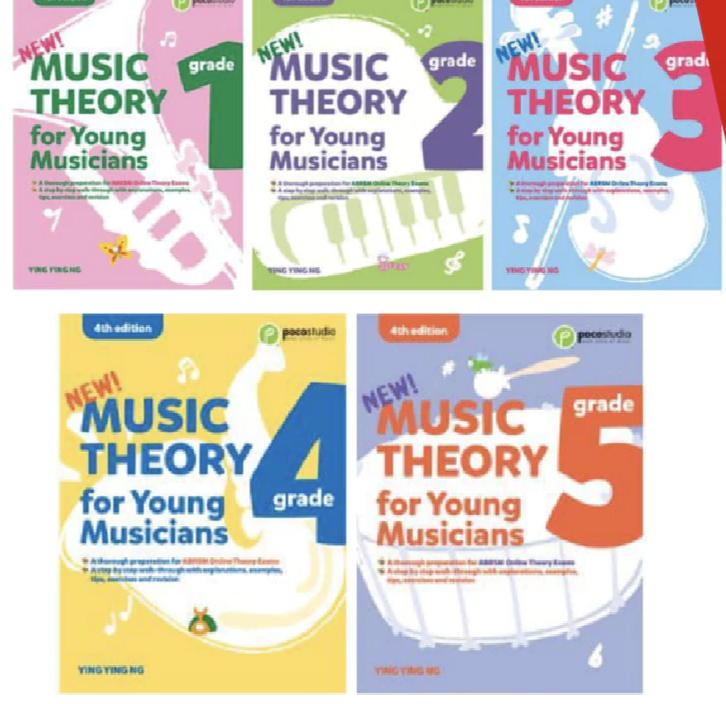
🎹 Music Theory for Young Musicians: The Piano Theory Book I Use for My Students (Grades 1–5)
Buy Book Here Via Shoppee : https://s.shopee.sg/20qrazK6GO
Introduction
This post contains affiliate links. I may earn a small commission at no extra cost to you.
Music Theory for Young Musicians (Grades 1–5) is a structured and child-friendly piano theory book series designed to help beginners build strong foundations in reading music, rhythm, and harmony. It is widely used for music theory for kids and supports ABRSM theory preparation effectively.When parents ask me about piano lessons, one question often comes up:
“Does my child need to learn music theory?”
The short answer is yes.
Music theory is what helps students understand what they are playing, not just copy notes. Without it, students often:
Memorise blindly
Struggle with rhythm and reading
Plateau early in their learning
However, the real challenge is not whether to learn theory — it’s how to learn it effectively.
Over the years, I’ve tested many materials. The series I consistently return to in my studio is:
Music Theory for Young Musicians by Ying Ying Ng
This is the main piano theory book I use in my lessons at Herman Piano Studio (Singapore).
Why I Use This Book in My Lessons
As a teacher, my goal is simple:
Help students become independent, thinking musicians, not just note readers.
For that to happen, theory needs to be:
Clear
Structured
Progressive
Engaging (especially for children)
Many theory resources are either too dry or too scattered. This series stands out because it:
Breaks concepts into small, manageable steps
Reinforces learning through consistent exercises
Aligns well with ABRSM theory preparation
It fits naturally into my teaching system, where theory supports practical playing every week.
Overview of the Book Series
The series covers Grades 1 to 5, making it suitable for most beginner to intermediate students.
What students learn:
Note reading (treble & bass clef)
Rhythm and time signatures
Scales and key signatures
Intervals and chords
Musical terms and symbols
How it progresses:
Grade 1–2: Foundations (notes, rhythm, basic symbols)
Grade 3–4: Understanding structure (keys, intervals, harmony basics)
Grade 5: Deeper theory (chords, transposition, musical understanding)
Each level builds logically on the previous one, which is crucial for long-term retention.
Pros of This Book
Here’s why I recommend this piano theory book to my students:
✅ Child-Friendly and Visually Engaging
Clean layout with illustrations
Not intimidating for young learners
Keeps attention better than traditional theory books
✅ Logical and Structured Progression
Concepts are introduced step-by-step
Reinforcement is built into exercises
Students don’t feel overwhelmed
✅ Strong for ABRSM Theory Preparation
Covers essential topics required for exams
Helps students build confidence gradually
Good bridge between beginner and formal exam work
✅ Engaging Exercises
A mix of writing, thinking, and application
Encourages active learning instead of passive reading
Cons of This Book
No book is perfect, and it’s important to be transparent.
⚠️ Requires Teacher Guidance
Younger students may not fully understand concepts independently
Best used alongside structured lessons
⚠️ Some Repetition
Certain exercises may feel repetitive
However, this can also help reinforce learning
⚠️ Limited Aural/Practical Integration
Focus is mainly written theory
Needs to be supplemented with listening and playing activities
Who This Book Is Best For
This series is especially suitable for:
🎯 Age Group
Typically 6–12 years old
Younger beginners starting structured learning
🎯 Skill Level
Beginner to intermediate students
Students working towards Grade 5 theory
🎯 Learning Goals
Students preparing for ABRSM theory exams
Students who want a strong musical foundation
Not just exam-focused learners, but also hobbyists who want to understand music better
How I Use This Book in My Lessons
At Herman Piano Studio, theory is not taught in isolation. It is integrated into weekly lessons.
Weekly Structure
5–10 minutes of theory work per lesson
Review of previous concepts
Introduction of new topic
Integration with Piano Playing
Concepts are applied directly to pieces
Example:
Learning scales → identifying key in pieces
Learning intervals → recognising patterns in music
Homework Approach
Students complete selected exercises each week
Focus is on understanding, not just finishing pages
Parents are guided on how to support at home
This approach ensures that theory becomes practical and meaningful, not just textbook knowledge.
Where to Get the Book
If you would like to get a copy of the same theory book I use with my students, you can purchase it here:
👉 https://s.shopee.sg/20qrazK6GO
I recommend starting with the grade that matches your child’s current level. If you’re unsure, feel free to reach out—I’m happy to advise.
Conclusion
Choosing the right music theory for beginners resource can make a big difference in a student’s progress.
A good piano theory book should:
Build understanding step-by-step
Support practical playing
Keep students engaged
Music Theory for Young Musicians does this reliably, which is why it remains a core part of my teaching at Herman Piano Studio.
With the right guidance and consistent practice, students can develop not just technique, but a deeper understanding of music—something that will benefit them for years to come.
If you’d like help structuring your child’s learning or preparing for exams, feel free to explore my piano lessons in Singapore or get in touch.
-This post contains affiliate links. I may earn a small commission at no extra cost to you.
