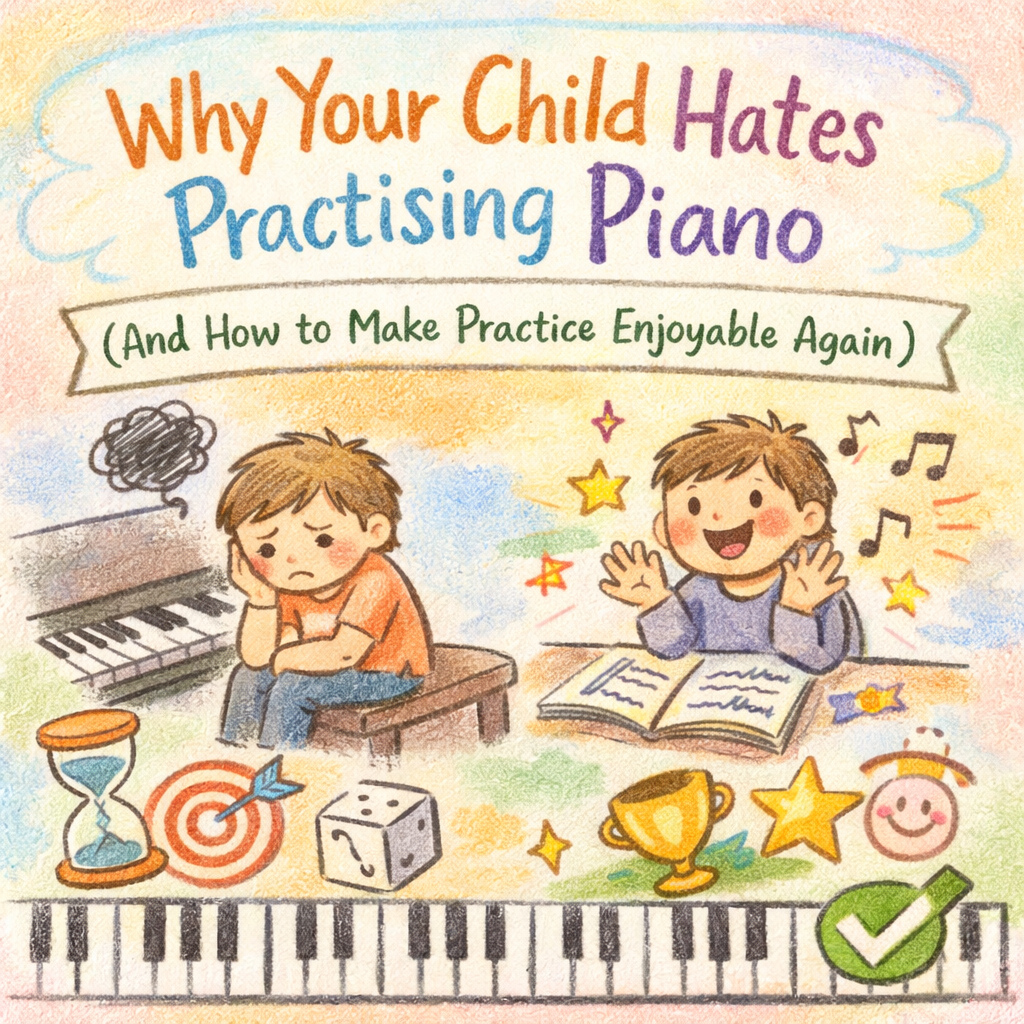
Why Your Child Hates Practising Piano (And How to Make Practice Enjoyable Again)
Introduction
Many parents face this situation:
“My child doesn’t want to practise.”
“Practice turns into a struggle every day.”
“They liked piano at first, but now they resist it.”
If this sounds familiar, you are not alone.
This is one of the most common challenges faced by families with children taking piano lessons for beginners.
The good news is that this issue is usually not about lack of talent or discipline. Instead, it often comes down to motivation, structure, and how practice is approached.
In this article, we will explore why children lose interest in practising piano—and most importantly, how to make practice enjoyable and sustainable again.
Why Children Start to Dislike Piano Practice
1. Practice Feels Like a Chore
When practice is forced or repetitive, children begin to associate piano with:
Pressure
Boredom
Stress
This removes the sense of enjoyment that is essential for long-term learning.
2. Lack of Clear Progress
Children need to feel that they are improving.
If they:
Keep making the same mistakes
Do not understand what to fix
Feel stuck on the same piece
they may lose motivation.
3. Pieces Are Too Difficult
When music is too challenging, children feel overwhelmed.
This can lead to:
Frustration
Avoidance
Loss of confidence
In effective beginner piano lessons, pieces should be achievable while still slightly challenging.
4. Practice Is Too Long or Unstructured
Long, unfocused practice sessions can feel tiring and ineffective.
Children benefit more from:
Short sessions
Clear goals
Structured activities
5. Lack of Variety
Doing the same thing every day can become boring.
Children need variety to stay engaged.
How to Make Piano Practice Enjoyable Again
1. Keep Practice Sessions Short and Focused
For young beginners:
10–20 minutes is often enough
Short sessions help maintain focus and reduce resistance.
2. Set Clear and Achievable Goals
Instead of saying “practise your piece,” try:
“Let’s fix these 2 bars”
“Let’s make this section smoother”
Clear goals make practice feel manageable.
3. Turn Practice Into a Game
You can make practice more fun by:
Timing how fast a section improves
Giving small rewards for effort
Setting simple challenges
This changes the mindset from “work” to “play”.
4. Celebrate Small Wins
Recognise progress, even if it is small:
Playing a section correctly
Improving rhythm
Remembering notes
Encouragement builds confidence and motivation.
5. Include Variety in Practice
A good practice session can include:
Scales
Pieces
Simple sight reading
Musical games
Variety keeps practice interesting.
6. Let the Child Feel Ownership
Allow the child to:
Choose a favourite piece occasionally
Decide the order of practice
Set small goals
This builds independence and interest.
The Role of a Good Teacher
An experienced piano teacher in Singapore plays a key role in maintaining student motivation.
A good teacher will:
Choose appropriate repertoire
Adjust lesson pace
Provide clear practice guidance
Keep lessons engaging
For students in piano lessons for beginners, the teacher’s approach can greatly influence whether the child enjoys learning.
Practical Piano Practice Tips for Parents
1. Create a Routine
Set a consistent time each day for practice.
Routine builds habit and reduces resistance.
2. Be Supportive, Not Forceful
Encouragement works better than pressure.
Avoid turning practice into a conflict.
3. Sit With Your Child Occasionally
Even without musical knowledge, your presence shows support and helps maintain focus.
4. Communicate With the Teacher
If your child is struggling, inform the teacher.
Adjustments can be made to improve the experience.
5. Focus on Effort, Not Perfection
Praise effort rather than results.
This builds a positive attitude toward learning.
Common Mistakes Parents Make
Forcing Long Practice Sessions
This often leads to burnout and resistance.
Expecting Fast Results
Piano learning takes time. Unrealistic expectations create unnecessary pressure.
Comparing With Other Children
Every child learns at a different pace.
Comparisons can reduce confidence and enjoyment.
Ignoring Emotional Response
If a child consistently feels frustrated, the approach needs adjustment.
Conclusion
If your child dislikes practising piano, it does not mean they are not suited for music.
In most cases, the issue lies in how practice is structured and experienced.
By focusing on:
Short, engaging practice sessions
Clear goals
Positive encouragement
Variety and enjoyment
practice can become something your child looks forward to.
For families exploring piano lessons for beginners, building a positive relationship with practice is just as important as learning the instrument itself.
With the right guidance from a supportive piano teacher in Singapore, children can develop not only musical skills—but also confidence, discipline, and enjoyment in learning.
