How Long Should a Beginner Practise Piano Each Day? (ABRSM-Based Guide for Parents in Singapore)
Introduction
One of the most common questions parents ask when their child starts learning piano is:
👉 “How long should my child practise every day?”
Some parents worry their child is not practising enough.
Others worry they might be pushing too hard.
You might hear questions like:
“Is 15 minutes enough?”
“Should my child practise every day?”
“Do serious students practise for hours?”
This is especially relevant for families enrolling in piano lessons for beginners, where habits are just starting to form.
The truth is:
👉 There is no one-size-fits-all answer.
👉 But there is a structured, proven guideline based on the ABRSM system.
In this article, we will break down exactly how long a beginner should practise, what that time should look like, and how to build effective routines that lead to real progress.
Why Practice Duration Matters More Than You Think
Many parents assume:
👉 “More practice = faster improvement”
But in reality:
❌ Too little practice → slow progress
❌ Too much practice → burnout and frustration
What actually matters is:
👉 Consistent, focused practice over time
Especially for beginners, building the right habit is more important than simply increasing duration.
ABRSM-Based Daily Practice Guidelines
The ABRSM system provides a useful framework for practice expectations at different levels.
Here is a practical guideline adapted for beginners:
🎼 Pre-Grade / Grade 1 Level
Recommended Practice Time: 10–20 minutes per day
At this stage, students are learning:
Basic note reading
Finger coordination
Simple rhythms
👉 Short, focused sessions work best
👉 Attention span is still developing
🎼 Grade 1–2 Level
Recommended Practice Time: 20–30 minutes per day
Students begin:
Playing longer pieces
Coordinating both hands
Developing rhythm control
👉 Practice becomes slightly longer
👉 Structure becomes more important
🎼 Grade 3 Level (Early Intermediate)
Recommended Practice Time: 30–45 minutes per day
Students need:
More repetition
Better control
Musical understanding
👉 Practice must now be structured, not random
The Bigger Question: What Happens During Practice?
Here’s the key insight most parents miss:
👉 30 minutes of unfocused practice is LESS effective than
👉 15 minutes of structured practice
So instead of asking:
❌ “How long should my child practise?”
Ask:
✅ “What is my child doing during practice?”
The Ideal Beginner Practice Structure
Here is a simple, effective structure you can follow at home:
⏱️ 1. Warm-Up (3–5 minutes)
Finger exercises
Simple scales or patterns
Goal:
👉 Wake up the fingers
👉 Build coordination
🎵 2. Piece Practice (10–20 minutes)
Focus on:
Current pieces from lessons
Difficult sections
Important:
👉 Break pieces into small parts
👉 Do NOT always play from start to finish
🎯 3. Problem-Solving (5–10 minutes)
This is where real improvement happens.
Fix mistakes
Practise tricky bars slowly
Repeat difficult passages
🎶 4. Enjoyment / Play (Optional)
Play a favourite piece
Explore sounds
This keeps:
👉 Motivation high
👉 Practice enjoyable
A Smarter Approach: The “Consistency Over Duration” Rule
For beginners:
👉 Practising 5–6 days a week is better than
👉 One long session once a week
Example:
20 minutes daily × 5 days = 100 minutes
1 long 100-minute session = ❌ much less effective
Why?
Because the brain learns through:
👉 Frequent repetition
👉 Regular reinforcement
Signs Your Child Is Practising the Right Amount
Here are some indicators that your child’s practice duration is appropriate:
✅ Positive Signs
Gradual improvement each week
Increased confidence
Ability to play more smoothly
❌ Warning Signs (Too Little Practice)
Constantly forgetting pieces
Slow progress
Struggling to keep up in lessons
❌ Warning Signs (Too Much Practice)
Frustration or resistance
Loss of interest
Mental fatigue
Common Mistakes Parents Make
❌ Forcing Long Practice Sessions
This often leads to:
Burnout
Negative associations with piano
❌ Prioritising Time Over Quality
Saying:
👉 “Practise for 30 minutes”
Without guidance often results in:
👉 Ineffective practice
❌ Inconsistent Practice Routine
Skipping days frequently leads to:
👉 Slow progress
❌ Comparing with Other Children
Every student progresses differently.
Focus on:
👉 Consistency and improvement—not comparison
How to Help Your Child Practise Effectively
As a parent, you don’t need to be a musician.
Here’s how you can support:
✔ Set a Fixed Daily Time
Example:
👉 After dinner
👉 Before bedtime
This builds routine.
✔ Be Present (At Least Occasionally)
Listen to your child
Show interest
This increases motivation.
✔ Ask Simple Questions
Instead of:
❌ “Did you practise?”
Ask:
👉 “What did you improve today?”
✔ Keep It Positive
Encouragement works better than pressure.
What About Adult Beginners?
For adults learning how to learn piano, the approach is slightly different.
Recommended:
👉 20–40 minutes per day
But more importantly:
Focus on consistency
Set realistic goals
Avoid overloading
Adults often benefit from:
👉 Structured lessons with a piano teacher in Singapore
Why This Matters for ABRSM Exams
For students preparing for exams under ABRSM:
Regular practice is essential
Progress is cumulative
Skills build over time
Without consistent practice:
❌ Pieces remain unstable
❌ Confidence drops
❌ Exam performance suffers
Conclusion
So, how long should a beginner practise piano each day?
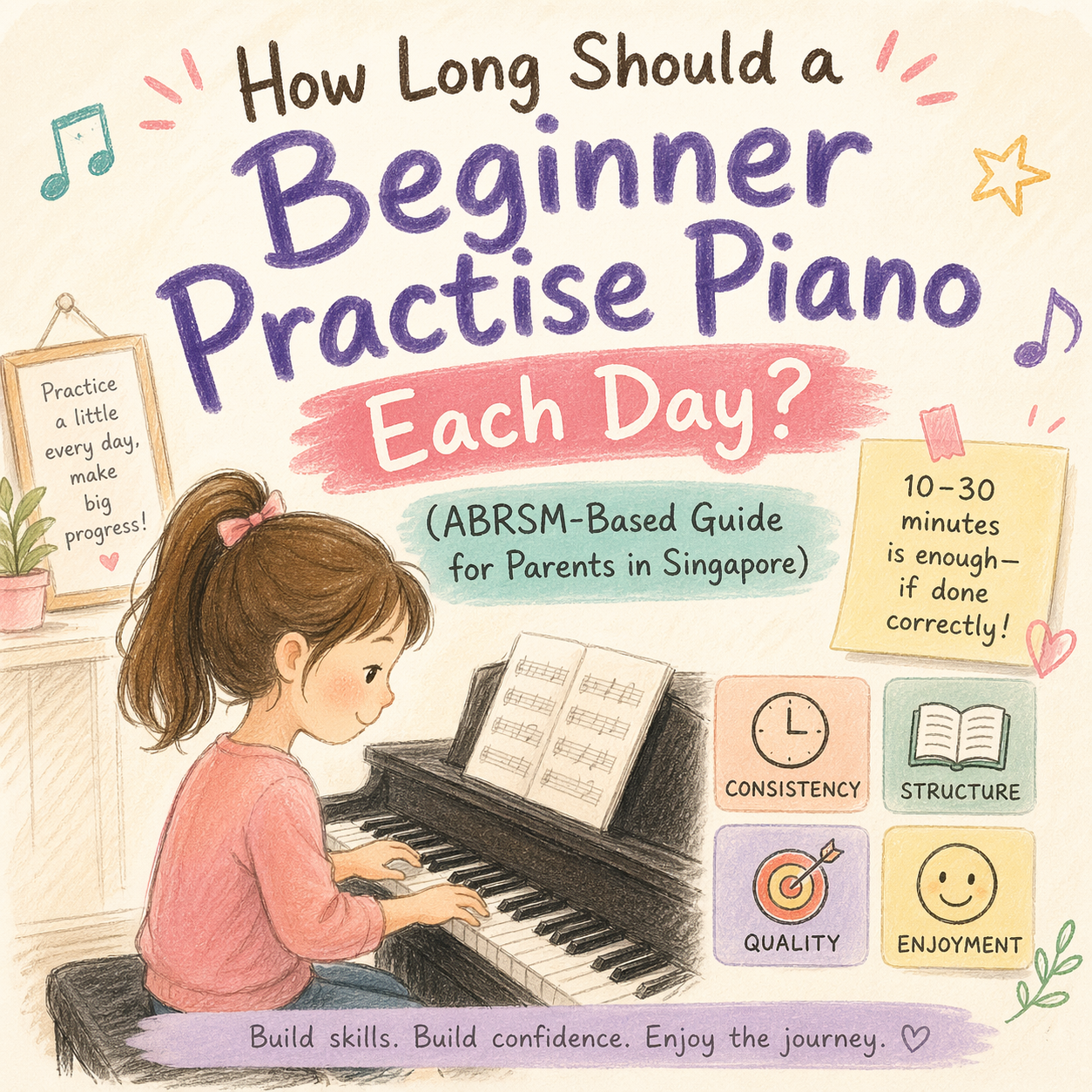
👉 10–30 minutes is enough—if done correctly
The real focus should be:
✔ Consistency
✔ Structure
✔ Quality practice
Over time, this builds:
Strong technique
Musical understanding
Confidence at the piano
If you’re looking for structured guidance and personalised support, enrolling in piano lessons for beginners with a qualified piano teacher in Singapore or Tampinescan make a significant difference.
At Herman Piano Studio, students are guided not just on what to practise, but how to practise effectively—ensuring steady progress and long-term success.
