How Often Should You Practise Piano? A Simple Guide for Beginners and Parents
Introduction
One of the most common questions students and parents ask is:
“How often should I practise piano?”
Some students practise once a week, while others try to practise every day—but are unsure if they are doing enough.
If you are taking piano lessons for beginners or considering starting lessons, understanding the right practice frequency is essential for steady progress.
The truth is, there is no one-size-fits-all answer. However, there are clear guidelines that can help students practise effectively without feeling overwhelmed.
In this article, we will break down how often you should practise piano, how long each session should be, and how to build a sustainable routine using practical piano practice tips.
Why Practice Frequency Matters
Learning piano is similar to learning a language or a sport—it requires regular and consistent repetition.
When students practise frequently:
Skills improve gradually
Muscle memory strengthens
Concepts become easier to understand
When practice is inconsistent:
Students forget what they learned
Progress slows down
Frustration increases
This is why frequency is often more important than duration, especially for students in beginner piano lessons.
How Often Should Beginners Practise Piano?
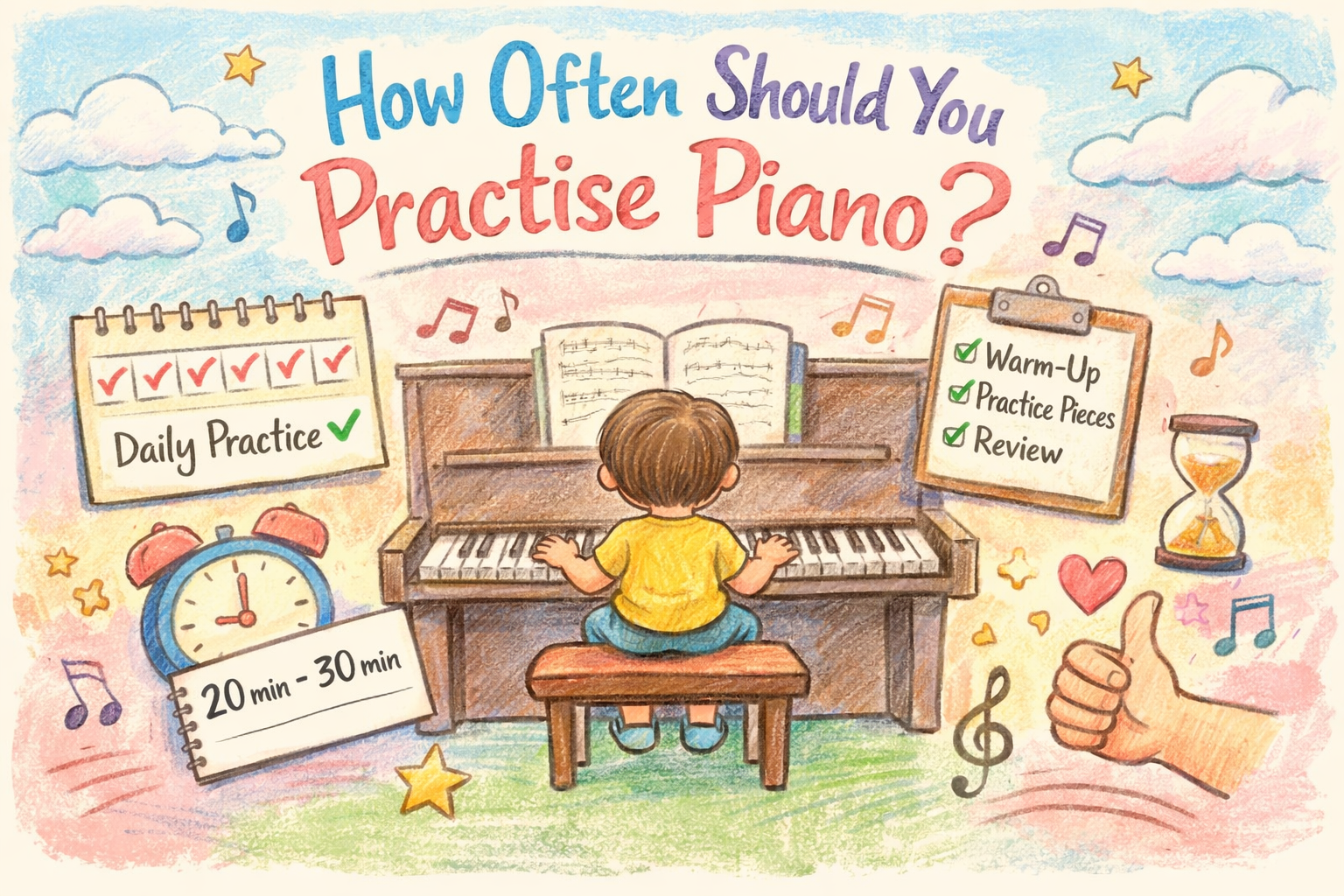
Ideal Frequency: Daily Practice
For most beginners, the ideal routine is:
👉 5–6 days per week
Daily practice helps maintain continuity and builds strong habits.
Even short sessions are highly effective when done consistently.
Minimum Recommendation
If daily practice is not possible, aim for:
👉 At least 3–4 times per week
Anything less than this may result in slower progress, especially for young students.
How Long Should Each Practice Session Be?
The length of practice depends on the student’s level and age.
Young Beginners (Ages 5–8)
10–20 minutes per session
Focus on short, engaging activities
Older Beginners (Ages 9–12)
20–30 minutes per session
Include technique and pieces
Teenagers and Adults
30–45 minutes per session
More structured and focused practice
The key is not just the length, but the quality of practice.
Quality vs Quantity: What Really Matters
Practising longer does not always mean better results.
Effective practice should include:
Clear goals
Focused attention
Problem-solving
Careful listening
For example:
20 minutes of focused practice = strong improvement
1 hour of distracted practice = little progress
Understanding how to learn piano effectively means prioritising quality over time spent.
What a Good Practice Routine Looks Like
A balanced practice session might include:
1. Warm-Up (5–10 minutes)
Scales or simple exercises
Finger control and technique
2. Focused Practice (10–20 minutes)
Work on difficult sections
Practise slowly
Fix mistakes
3. Play Through (5–10 minutes)
Play the full piece
Focus on musical expression
This structure helps students improve efficiently and stay engaged.
Practical Piano Practice Tips
1. Set a Fixed Practice Time
Having a regular time each day builds consistency.
Example:
After school
Before dinner
Before bedtime
2. Keep Practice Sessions Short and Focused
Avoid long, tiring sessions. Short sessions with full focus are more effective.
3. Use a Practice Checklist
A simple checklist helps students stay organised:
Scales
Pieces
Problem sections
4. Track Progress
Encourage students to notice improvement over time.
This builds motivation and confidence.
5. Stay Consistent
Consistency is the most important factor in learning piano.
Even small daily improvements add up over time.
Common Mistakes Students Make
Practising Only Before Lessons
Many students practise only the day before their lesson.
This leads to:
Weak memory
Poor technique
Slow progress
Practising Too Long, Too Rarely
Long practice sessions once a week are less effective than short daily sessions.
Lack of Focus
Practising while distracted reduces effectiveness.
Students should practise with full attention.
Skipping Practice Completely
Missing multiple days breaks learning continuity and slows progress significantly.
How Parents Can Support Practice
For younger students, parents play an important role.
You can help by:
Setting a daily routine
Providing encouragement
Ensuring practice is completed
Keeping sessions positive and stress-free
Parents do not need musical knowledge—consistency and support are enough.
Conclusion
So, how often should you practise piano?
The simple answer is:
👉 Practise regularly and consistently—ideally every day
For students taking piano lessons for beginners, consistent short practice sessions are the key to steady progress.
By focusing on:
Regular practice
Good structure
Quality over quantity
students can develop strong foundations and enjoy learning the piano.
With guidance from an experienced piano teacher in Singapore, students can build effective habits that lead to long-term success.
Remember—progress in piano is not about how much you practise in one day, but how consistently you practise over time.
