Struggling to Play Hands Together on the Piano? Here’s How to Fix It Step-by-Step
Introduction
One of the biggest frustrations for piano students is this:
👉 “I can play both hands separately… but everything falls apart when I put them together.”
Parents often notice that their child:
Plays confidently with one hand
Suddenly hesitates or stops when both hands are combined
Gets stuck at the same sections again and again
This is an extremely common issue, especially in beginner piano lessons and early intermediate levels.
The good news is — this problem is completely normal, and more importantly, it can be solved with the right approach.
In this article, I will explain why hands coordination is difficult and share clear, practical piano practice tips to help you improve quickly and effectively.
What Is the Problem (Simple Explanation)
The problem is:
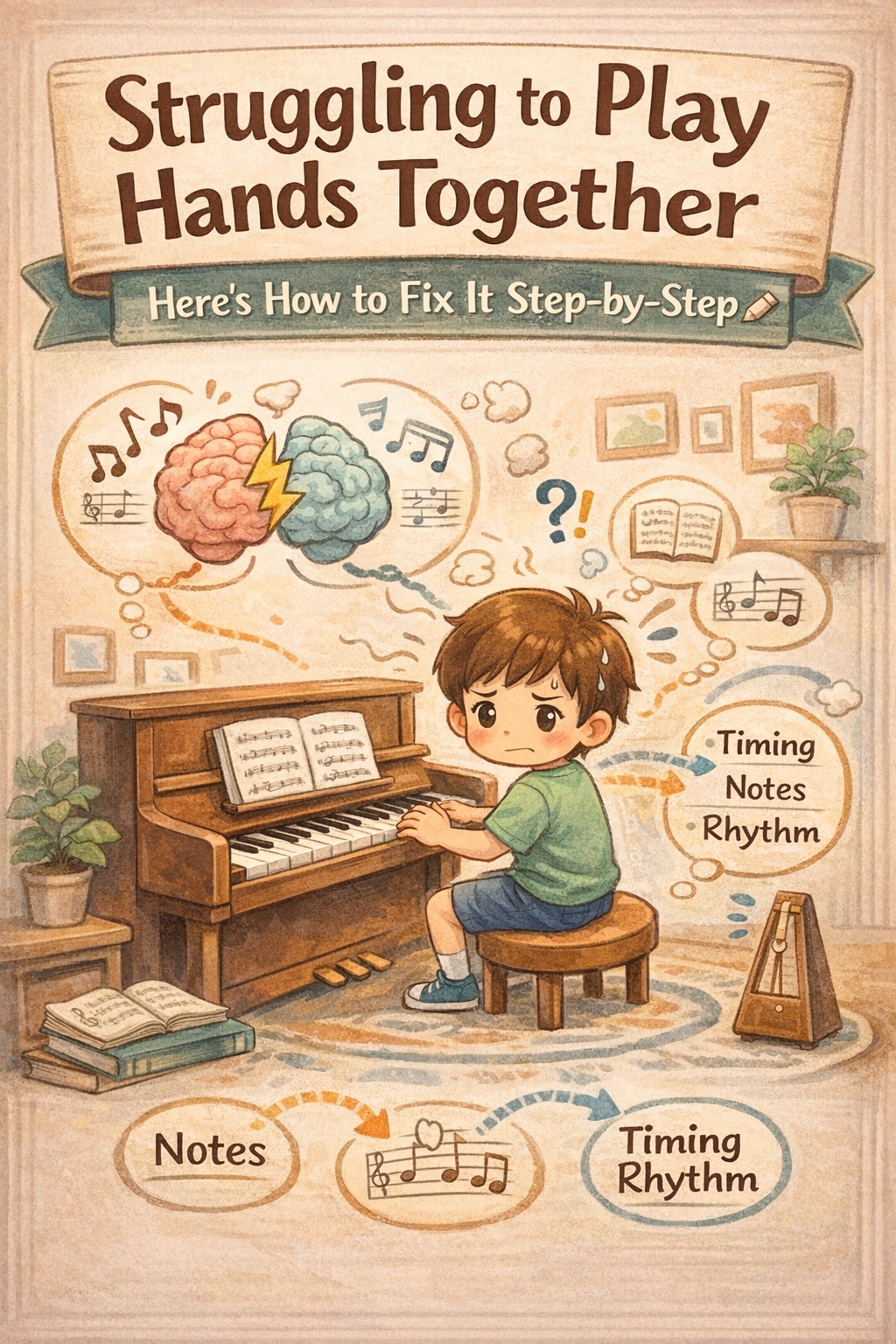
👉 Your brain is trying to manage two different tasks at the same time.
When playing hands separately:
Each hand focuses on its own notes and rhythm
When playing hands together:
Your brain must coordinate timing, rhythm, and movement simultaneously
This affects:
Beginners learning their first pieces
Students preparing for ABRSM exams
Even adult learners returning to piano
Why This Problem Happens
1. Brain Overload
Your brain is not yet trained to process both hands together.
Result:
Hesitation
Wrong notes
Loss of rhythm
2. Weak Individual Hand Confidence
If one hand is not secure:
It collapses when combined
Many students think they “know” a hand, but it is not fully stable.
3. Trying Hands Together Too Early
This is one of the biggest mistakes.
Students often:
Rush into hands together
Skip proper preparation
4. Lack of Rhythmic Awareness
Hands together playing requires:
Strong sense of pulse
Clear coordination
Without rhythm control, everything feels messy.
5. Practising Without Strategy
Simply repeating hands together does NOT fix the issue.
👉 This is where many students get stuck.
Step-by-Step Practice Solutions
Here’s how to fix hands coordination properly.
✅ 1. Make Sure Each Hand Is Truly Secure
Before combining:
Ask:
Can I play this hand slowly without mistakes?
Can I play it without looking at my hands constantly?
If not → it is not ready.
✅ 2. Start Extremely Slowly (Slower Than You Think)
Hands together practice should feel almost too easy.
Try:
Half speed or slower
Focus on accuracy, not speed
👉 Control first, speed later.
✅ 3. Use “Stop-and-Prepare” Method
Before difficult notes:
Pause slightly
Prepare both hands
Then play
This builds coordination safely.
✅ 4. Practise in Small Sections
Do NOT attempt the whole piece.
Instead:
Work in 1–2 bar sections
Repeat until comfortable
Then connect sections
✅ 5. Align the Hands Rhythmically
Identify:
Which notes happen together
Practise:
Clap both rhythms
Count out loud
This strengthens coordination.
✅ 6. Use “Hands Together Skeleton Practice”
Simplify the texture:
Play only important notes (e.g. first note of each group)
Gradually add more notes
This reduces overload.
✅ 7. Repeat Correctly, Not Randomly
When you succeed:
Repeat the correct version 3–5 times
👉 This builds strong muscle memory.
Practical Practice Routine
🎯 20–30 Minute Practice Plan
1. Hands Separate Review (5–10 mins)
Ensure both hands are secure
2. Slow Hands Together (10–15 mins)
Work on small sections
Fix mistakes immediately
3. Rhythm Practice (5 mins)
Clap or count tricky sections
4. Full Playthrough (5 mins)
Slow and controlled
Common Mistakes to Avoid
❌ Playing too fast when combining hands
❌ Skipping hands separate practice
❌ Practising whole piece instead of sections
❌ Ignoring rhythm problems
❌ Repeating mistakes
Conclusion
If you struggle with hands together coordination, remember:
👉 It is not a talent issue — it is a training issue.
With the right piano practice techniques:
Slow practice
Section work
Proper preparation
You can improve steadily and confidently.
If you or your child need structured guidance, working with an experienced piano teacher in Singapore can make a significant difference in building strong coordination skills from the beginning.
