Should You Learn Piano on a Keyboard or Acoustic Piano? A Beginner’s Guide
Introduction
If you are thinking about starting piano lessons, one of the first questions you may ask is:
“Should I learn on a keyboard or an acoustic piano?”
This is a very common concern among parents looking for piano lessons for children, as well as adults starting beginner piano lessons.
With so many digital keyboards available today, it may seem like an easy and affordable option. However, many experienced teachers still recommend learning on an acoustic piano whenever possible.
In this article, we will explore the differences between keyboards and acoustic pianos, and help you decide which option is best for learning how to learn piano effectively.
Understanding the Difference: Keyboard vs Acoustic Piano
Before deciding, it is important to understand how these instruments differ.
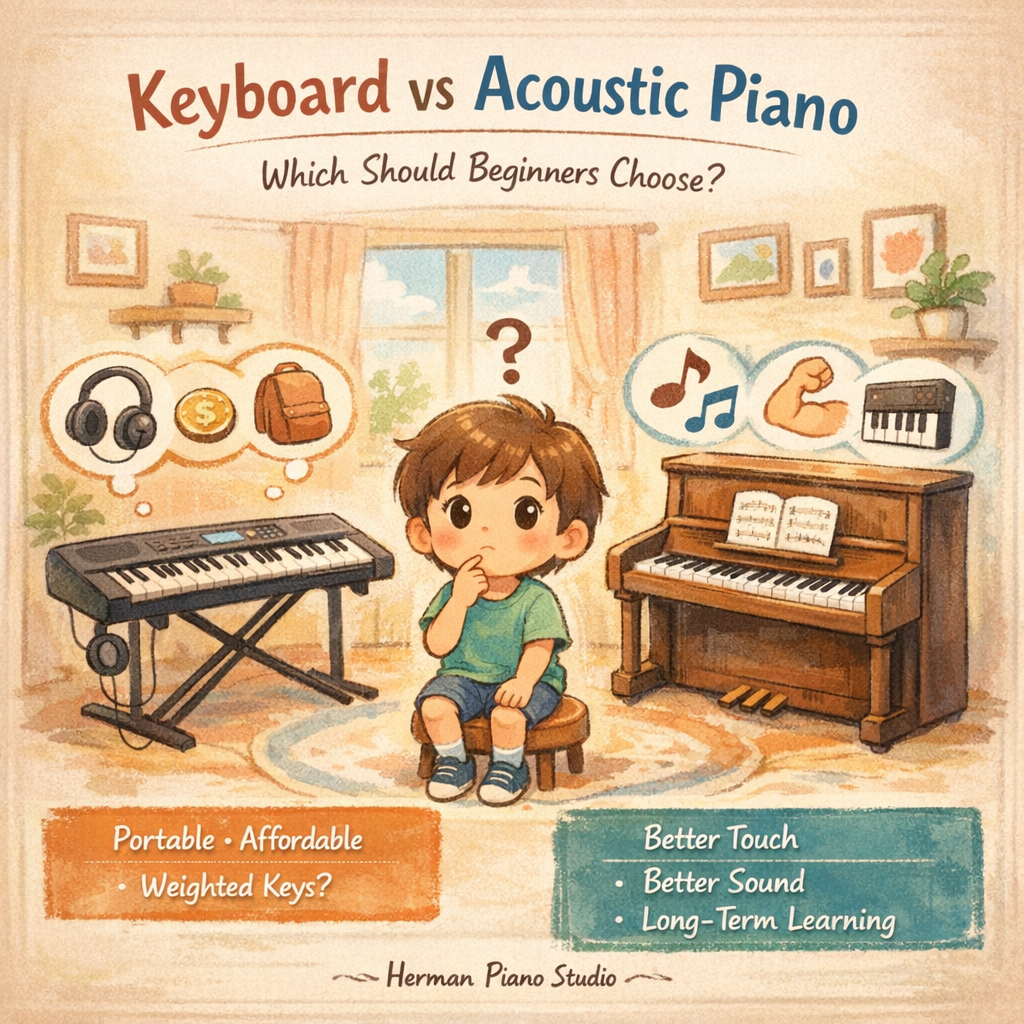
Acoustic Piano
An acoustic piano produces sound through hammers striking strings inside the instrument.
Key features:
Weighted keys
Natural sound resonance
Greater dynamic control
Responsive touch sensitivity
This allows students to develop proper technique and musical expression from the beginning.
Digital Keyboard
A keyboard produces sound electronically through speakers.
Key features:
Lightweight and portable
Lower cost
Volume control and headphone use
Variety of sounds
However, not all keyboards have weighted keys, which is a crucial factor for learning proper technique.
Why Touch and Key Weight Matter
One of the most important aspects of learning piano is developing finger strength and control.
On an acoustic piano:
Keys offer resistance
Students learn how to control tone
Dynamics (soft vs loud) are easier to develop
On a basic keyboard:
Keys are often too light
Students may not build sufficient finger strength
Musical control can be limited
For students taking piano lessons for beginners, starting with proper touch is essential. Otherwise, it can be difficult to adjust later when moving to a real piano.
How Instrument Choice Affects Learning Progress
The instrument you use can significantly impact how quickly you improve.
Learning on an Acoustic Piano
Students tend to:
Develop better technique
Control dynamics more effectively
Transition easily to exams and performances
This is especially important for students preparing for ABRSM exams, where expressive playing is required.
Learning on a Keyboard
Students may:
Progress well initially
Struggle with dynamics and tone control later
Need time to adjust when switching to an acoustic piano
However, a high-quality digital piano with weighted keys can still be a very good option.
When a Keyboard Is a Good Choice
Despite the advantages of an acoustic piano, a keyboard can still be suitable in certain situations.
A keyboard may be a good choice if:
You are a complete beginner exploring interest
Space is limited in your home
You need a more affordable option
You require silent practice with headphones
In these cases, it is strongly recommended to choose a digital piano with weighted keys, rather than a basic keyboard.
When an Acoustic Piano Is Better
An acoustic piano is generally the better choice if:
You are committed to long-term learning
Your child is preparing for exams
You want to develop proper technique from the start
You value tone quality and musical expression
Many experienced teachers and piano teachers in Singapore recommend acoustic pianos for serious students.
Practical Tips for Choosing the Right Instrument
If you are deciding between a keyboard and piano, here are some practical guidelines.
1. Choose Weighted Keys
If buying a digital instrument, ensure it has fully weighted keys. This mimics the feel of an acoustic piano.
2. Avoid Very Cheap Keyboards
Basic keyboards may hinder progress because they do not develop proper finger technique.
3. Consider Long-Term Goals
If your goal is to pass exams or play advanced repertoire, investing in a proper instrument will save time later.
4. Try Before You Buy
Visit a music store and test different instruments. Pay attention to:
Key resistance
Sound quality
Overall feel
5. Ask Your Teacher for Advice
A qualified piano teacher in Singapore can recommend suitable instruments based on your level and goals.
Common Mistakes Beginners Make
Choosing the wrong instrument can lead to unnecessary challenges.
Buying an Unweighted Keyboard
This is one of the most common mistakes. It may feel easier at first, but it slows down technical development.
Focusing Only on Price
While budget is important, choosing the cheapest option can affect long-term progress.
Ignoring Sound Quality
Good sound helps students develop musical sensitivity and enjoyment.
Switching Too Late
Students who start on a basic keyboard and switch to an acoustic piano later often need time to adjust their technique.
Conclusion
So, should you learn piano on a keyboard or an acoustic piano?
The answer depends on your goals, budget, and commitment level.
For serious learning and long-term progress, an acoustic piano or weighted digital piano is highly recommended.
For beginners exploring interest, a good-quality keyboard with weighted keys can be a practical starting point.
Ultimately, the most important factor is consistent practice and proper guidance.
With the right instrument and effective piano practice tips, students can build strong foundations and enjoy the journey of learning music.
If you are unsure, consulting an experienced piano teacher in Singapore can help you make the best decision for your learning path.
