What is Sonata Form?
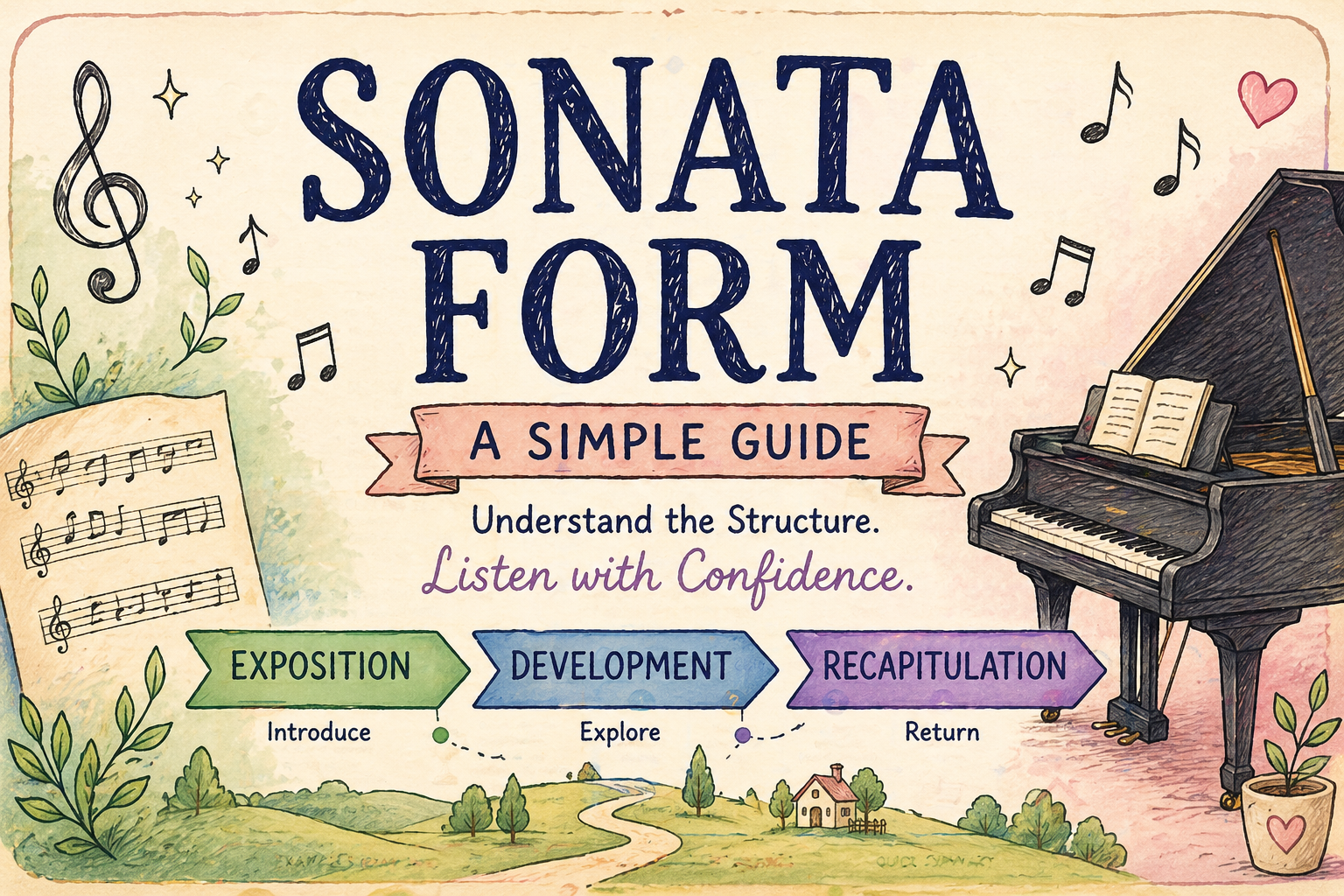
1. What is Sonata Form?
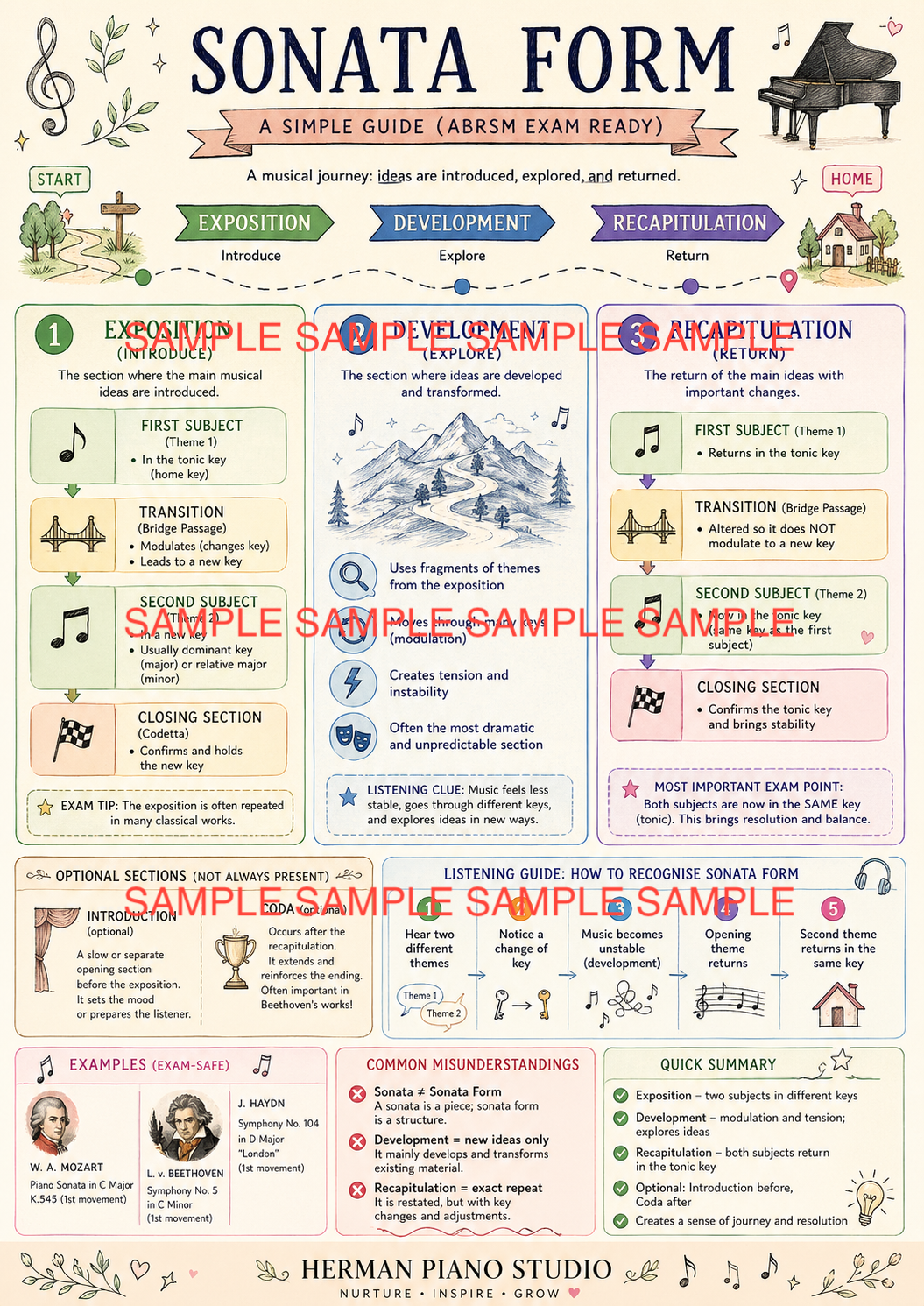
Sonata form is a musical structure commonly used in the first movement of sonatas, symphonies, and chamber works during the Classical period.
It is built around three main sections:
Exposition → Development → Recapitulation,
where musical ideas are presented, explored, and then returned in a balanced way.
2. Why It Matters
For composers:
Provides a clear framework to create contrast, tension, and resolution
Allows development of musical ideas in a logical and expressive way
For students :
Frequently tested in listening (aural) and theory understanding
Helps students interpret structure when performing longer pieces
Essential for understanding works by Wolfgang Amadeus Mozart, Joseph Haydn, and Ludwig van Beethoven
3. Main Structure Breakdown
🎵 A. Exposition
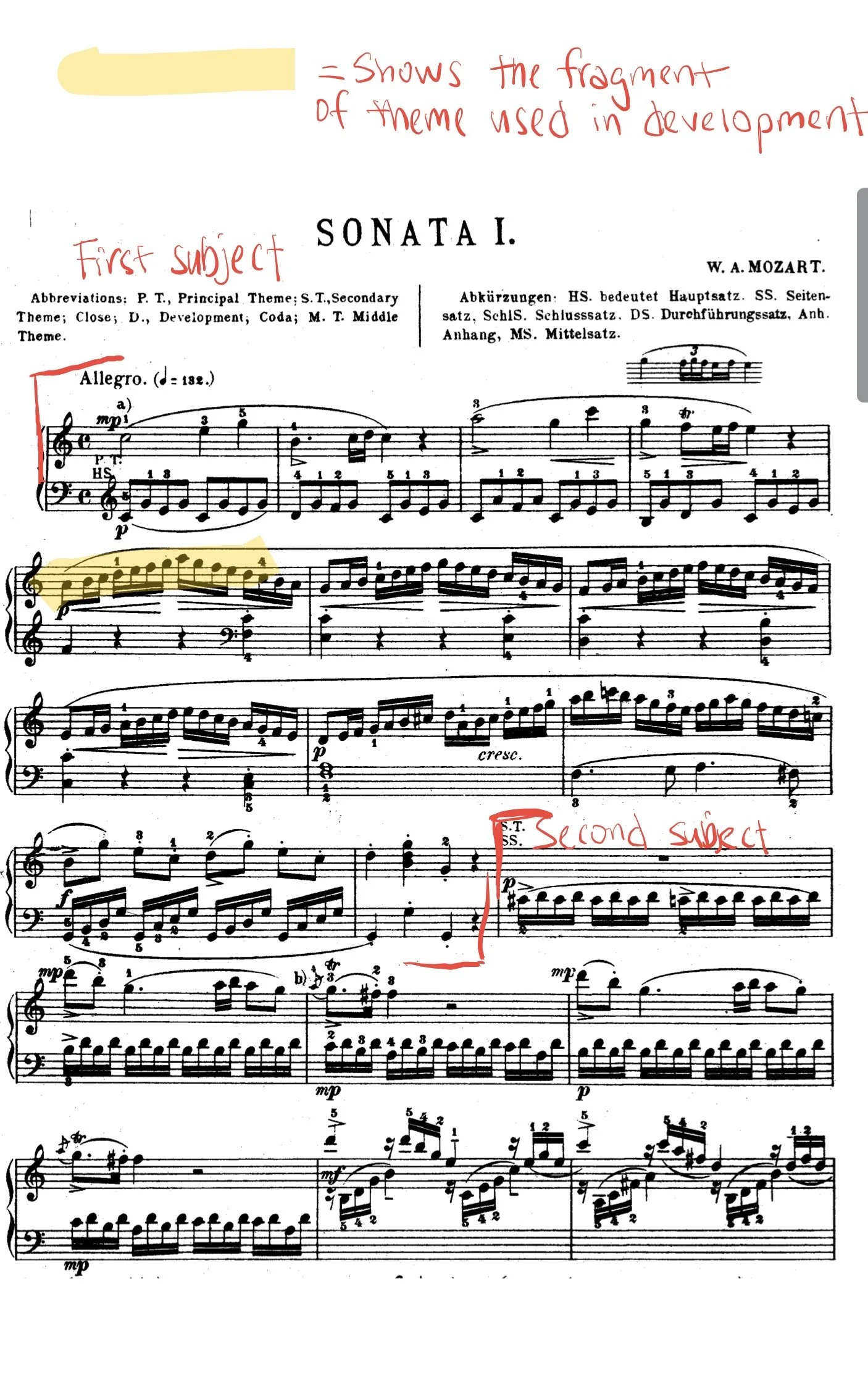
The Exposition introduces the main musical material.
It typically contains:
First Subject (Theme 1)
In the tonic key (main key)
Often strong and rhythmically clear
Transition (Bridge Passage)
Modulates (changes key)
Leads towards a new key
Second Subject (Theme 2)
In a contrasting key
Usually dominant (major keys)
Or relative major (minor keys)
Often more lyrical or contrasting in character
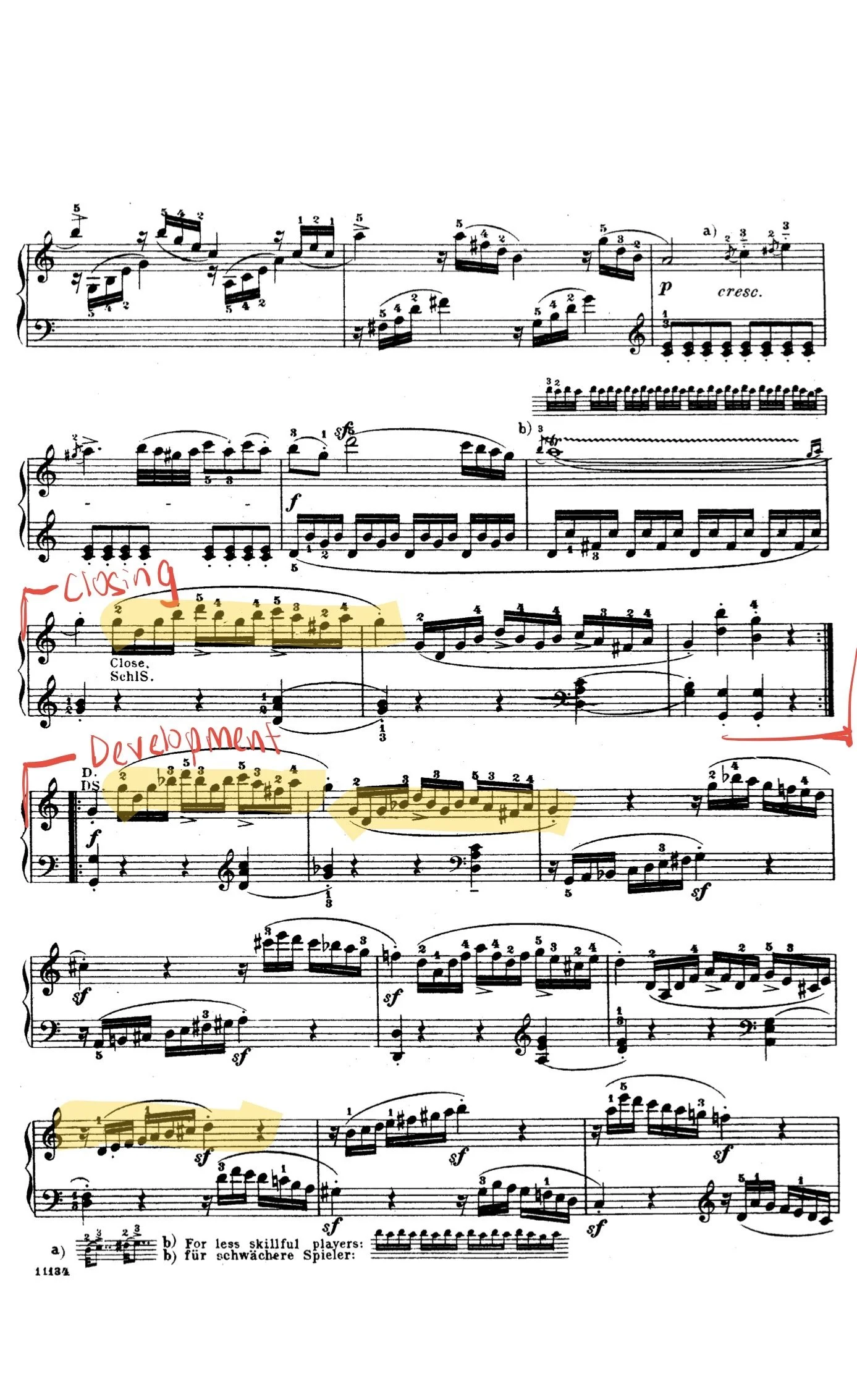
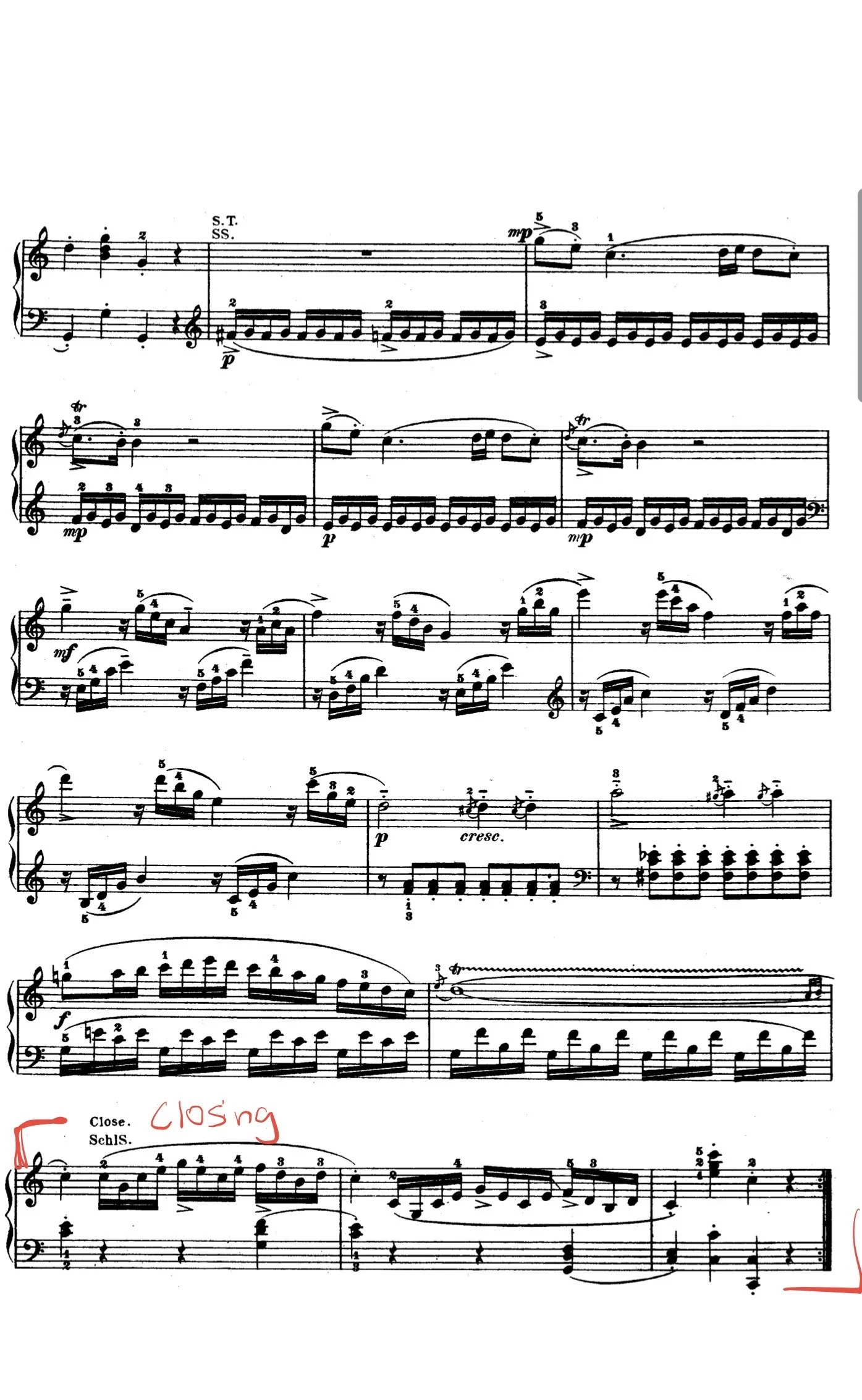
Closing Section (Codetta)
Confirms the new key
👉 In many Classical works, the exposition is repeated
🎵 B. Development
The Development explores and transforms earlier material.
Uses fragments of themes from the exposition
Moves through multiple keys (modulation)
Creates instability and tension
May introduce new ideas, but usually based on earlier material
👉 This section is often the most dramatic and unpredictable
🎵 C. Recapitulation
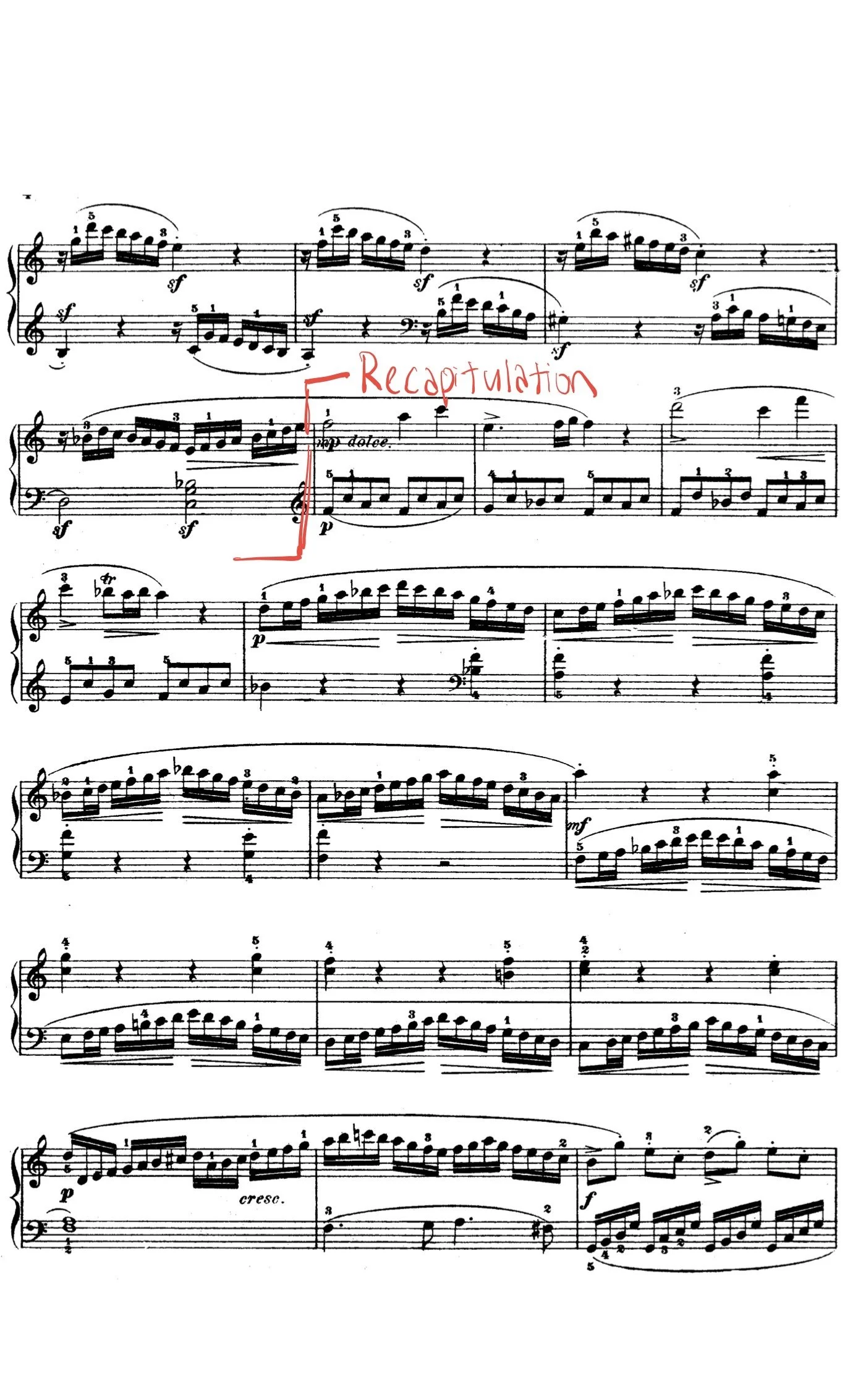
The Recapitulation restates the main material with structural adjustments.
First Subject returns in the tonic key
Transition is altered so it does NOT modulate away
Second Subject now also appears in the tonic key (important exam point)
Closing material confirms the tonic
👉 This resolves the harmonic tension created earlier
➕ Optional Sections
Introduction (optional)
Appears before the exposition
Often slower and separate in character
Coda (optional but sometimes substantial)
Occurs after the recapitulation
Extends and reinforces the ending
Especially important in works by Ludwig van Beethoven
4. Simple Listening Guide
When listening, identify:
🎧 Exposition
Two contrasting themes
Clear change of key
🎧 Development
Fragmented ideas
Frequent modulation
Less stable, more exploratory
🎧 Recapitulation
Return of opening theme
Second theme now in same key as the first
💡 Key listening clue for exams:
👉 “Does the second subject return in the tonic?”
→ If yes, you are likely in the recapitulation
5. Real Music Examples
Reliable, exam-safe examples:
🎹 Mozart Piano Sonata in C Major K.545
🎹 Beethoven Symphony No. 5
👉 These are commonly used to demonstrate clear textbook sonata form
6. Common Misunderstandings.
❌ “Sonata form = any sonata”
→ A sonata is a piece; sonata form is a structure❌ “There are always only 2 themes”
→ There can be more, but exams focus on two main subject groups❌ “Development introduces completely new material”
→ It mainly develops existing material❌ “Recapitulation is identical to exposition”
→ It is modified, especially in key structure
7. Quick Summary
Sonata form = Exposition → Development → Recapitulation
Exposition: two subjects in different keys
Development: modulation + thematic development
Recapitulation: both subjects return in tonic
Optional: Introduction + Coda
Key exam idea: resolution back to tonic
🎯 Final Note
For exams, the most important concepts to remember are:
Contrast of keys in the exposition
Instability in the development
Return to tonic in the recapitulation
If you need help and are looking for a music teacher in Singapore, do reach out via the contact form.
You may also purchase a printable info chart for Sonata Form by clicking onto the poster below.