Why You Keep Restarting When You Make Mistakes (And How “Continue-Flow Practice” Fixes It)
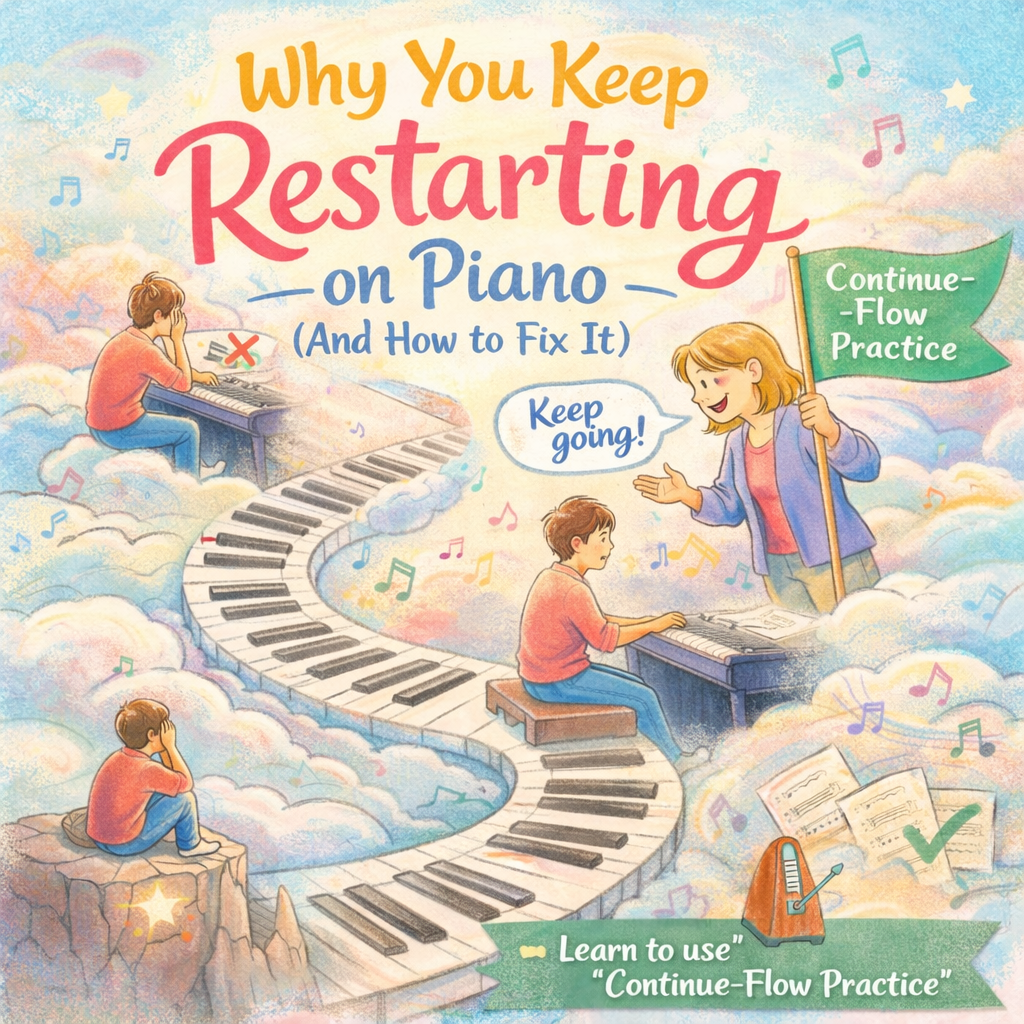
Introduction
Many piano students share the same frustrating habit:
They start playing a piece…
Make a mistake…
And immediately stop and restart from the beginning.
This happens again and again during practice.
While it may feel like you are “fixing” the problem, this habit actually slows down progress significantly.
It is especially common among students taking piano lessons for beginners, where perfection is often the focus.
In reality, constantly restarting prevents students from developing one of the most important musical skills: continuity.
In this article, we will explore why this happens and introduce a powerful method called Continue-Flow Practice, which helps students play smoothly—even when mistakes occur.
Why Restarting Is a Problem
1. It Breaks Musical Flow
Music is meant to move forward continuously.
When students stop frequently:
The rhythm is disrupted
Musical phrasing is lost
Confidence decreases
2. It Trains the Brain to Stop
Each time you stop after a mistake, you reinforce the habit:
👉 Mistake = Stop
Over time, this becomes automatic—even during exams or performances.
3. It Weakens Performance Skills
In real situations such as:
Exams
Performances
Recitals
You cannot restart.
Students who rely on restarting often struggle under pressure.
4. It Wastes Practice Time
Repeatedly restarting from the beginning means:
You over-practise the start
You neglect the middle and ending
Progress becomes uneven
What Is Continue-Flow Practice?
Continue-Flow Practice is a method that trains students to:
👉 Keep playing forward—even when mistakes happen
Instead of stopping, students learn to:
Recover quickly
Maintain rhythm
Stay musically engaged
This builds both technical control and performance confidence.
How Continue-Flow Practice Works
Step 1: Accept That Mistakes Will Happen
The goal of practice is not perfection—it is improvement.
Shift your mindset:
👉 Mistake = Continue, not stop
Step 2: Play Through Without Stopping
Set a rule:
Once you start, do not stop until the end
Even if mistakes occur, keep the rhythm going.
Step 3: Mark Problem Sections
After finishing:
Identify where mistakes occurred
Mark those sections
Then return to fix them separately
Step 4: Practise Problem Sections in Isolation
Work on difficult spots using:
Slow practice
Hands separate
Repetition
Step 5: Reintegrate Into Full Playthrough
After fixing sections:
Play the full piece again
Maintain continuous flow
Why This Method Works
Continue-Flow Practice helps students:
Develop recovery skills
Maintain steady rhythm
Build performance confidence
Avoid panic during mistakes
It is one of the most overlooked yet powerful piano practice tips.
Practical Tips to Strengthen This Skill
1. Use a “No Stop” Rule
During certain practice rounds:
👉 No stopping allowed
This builds mental discipline and flow.
2. Practise With a Metronome
A steady pulse forces you to keep going.
3. Lower the Tempo
Play slowly enough to maintain control while continuing.
4. Simulate Performance
Pretend you are in an exam:
Play from start to finish
No restarting
Stay focused
5. Train Recovery Points
If you get lost, practise jumping to:
The next phrase
A familiar section
This builds confidence under pressure.
Common Mistakes Students Make
Stopping Immediately After Errors
This reinforces the wrong habit.
Focusing Only on Perfection
Perfection is built gradually—not instantly.
Avoiding Full Playthroughs
Students who never play through cannot develop flow.
Panic When Mistakes Happen
Mistakes are normal. The key is recovery, not avoidance.
Who Should Use Continue-Flow Practice?
This method is especially helpful for:
Students in beginner piano lessons
Children preparing for exams
Students who freeze during mistakes
Anyone learning longer pieces
A skilled piano teacher Tampines will often train students to handle mistakes confidently, not fear them.
Conclusion
Restarting after mistakes may feel natural—but it is one of the biggest obstacles to real progress.
By using Continue-Flow Practice, students can learn to:
Stay calm during mistakes
Maintain musical flow
Build confidence in performance
For those taking piano lessons for beginners, this habit is essential for long-term success.
With consistent practice and guidance from an experienced piano teacher Tampines, students can transform mistakes from a source of frustration into an opportunity for growth.
Remember:
👉 Great pianists are not those who never make mistakes—
👉 but those who know how to keep going when they do.
