Before You Choose Wade in the Water C3 (ABRSM Grade 4 2027–2028): Honest Review
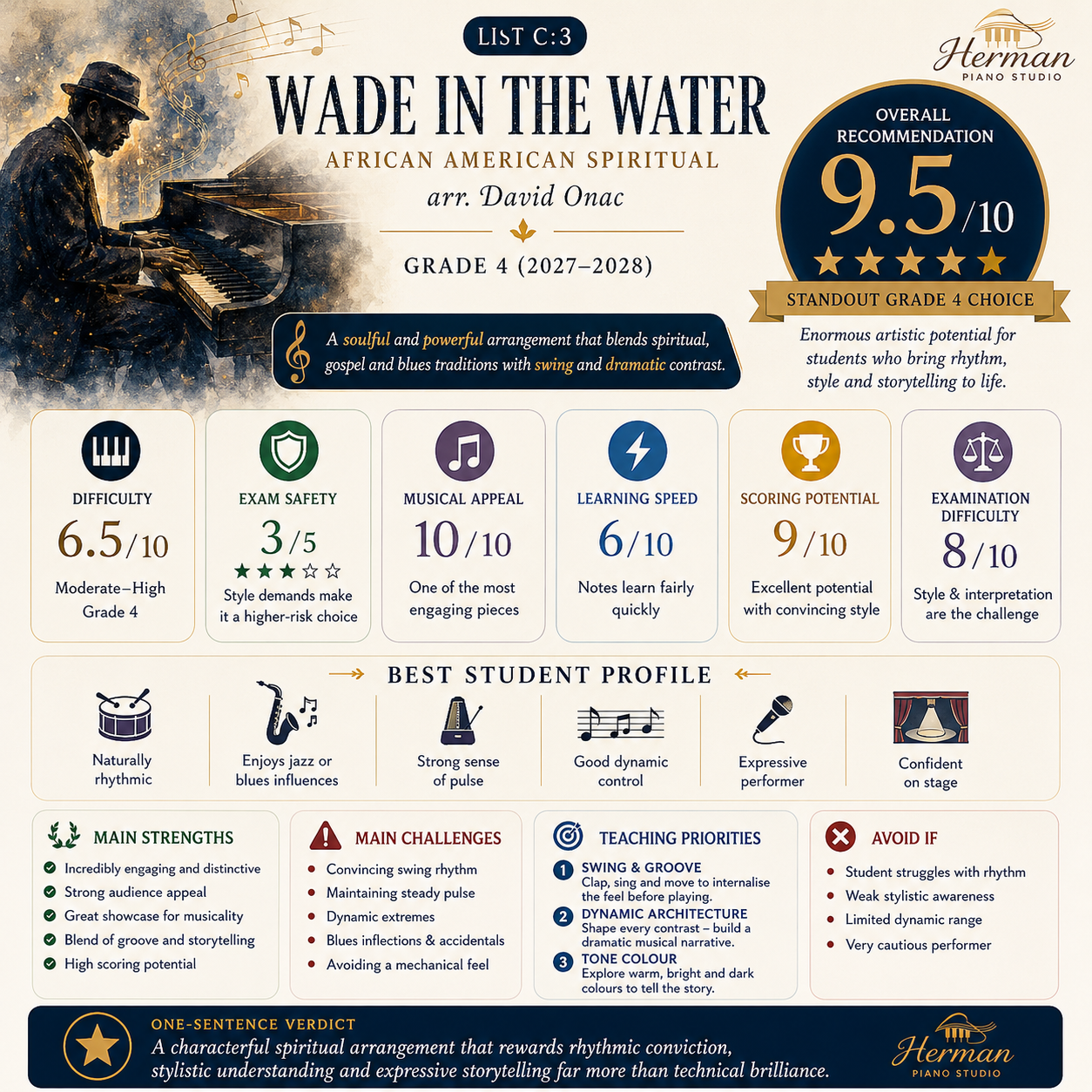
Here’s My Take on C:3 – Wade in the Water(African American Spiritual, arr. David Onac)
Overall Verdict
One of the most distinctive and rewarding Grade 4 pieces, but also one of the highest-risk choices if the student does not understand the style.
Although the notes are technically manageable for Grade 4, this arrangement asks for mature stylistic awareness:
convincing swing rhythm
blues-inspired articulation
strong dynamic contrasts
tonal colour
rhythmic confidence
characterful storytelling
Students who simply “play the notes” will miss much of what makes this piece effective.
Student Suitability Profile
👤 Ideal Student Rhythmic storyteller with a strong sense of groove
📈 Learning Curve Moderate
🎹 Technical Demand Moderate
🎼 Musical Demand Very High
🏆 Distinction Potential Exceptional
⭐ Overall Recommendation
9.5/10 – A standout Grade 4 choice that offers enormous artistic potential. It is less about technical brilliance than about authentic style, rhythmic conviction, and expressive communication. A student who truly understands the idiom can leave a lasting impression on both examiner and audience.
What Makes This Piece Difficult?
Unlike many Grade 4 pieces, the challenge is not speed.
Instead, success depends on communicating:
groove
swing
blues colour
dramatic contrast
rhythmic flexibility
A technically accurate but stylistically neutral performance is unlikely to stand out.
Main Technical Challenges
1. Swing Rhythm
The opening immediately establishes a swing feel.
Students often:
❌ straighten the rhythm
❌ play it like classical quavers
The swing must feel natural rather than exaggerated.
2. Repeated Chord Accompaniment
The left hand frequently repeats accompaniment figures.
The challenge is to maintain:
steady pulse
relaxed arm weight
consistent tone
without becoming mechanical.
3. Dynamic Extremes
The score moves rapidly between:
pp
mp
mf
f
ff
These contrasts create the drama and should be unmistakable.
4. Blues Accidentals
The arrangement includes numerous chromatic notes and “blue note” inflections.
These must sound expressive rather than accidental.
Main Musical Challenges
1. Understanding the Spiritual Style
This is not simply jazz.
The piece combines:
African American spiritual tradition
gospel influence
blues harmony
swing rhythm
The result should sound:
✓ soulful
✓ powerful
✓ hopeful
rather than merely “jazzy.”
2. Storytelling
The arrangement builds through waves of tension and release.
Students should identify:
where the music gathers strength
where it relaxes
where the emotional climax occurs
3. Colour Changes
The repeated phrases should never sound identical.
Each return offers an opportunity to vary:
tone
dynamic
intensity
Common Student Mistakes
Most Common
❌ Playing straight instead of swinging
❌ Weak rhythmic pulse
❌ Ignoring dynamic contrasts
❌ Blues notes sounding accidental
❌ Mechanical repeated chords
❌ Over-pedalling
❌ Playing politely instead of boldly
Teaching Priorities
Priority 1
Internalise the swing
Have the student clap, sing, and move to the rhythm before playing.
Priority 2
Dynamic Architecture
Map every:
crescendo
diminuendo
subito contrast
The piece should feel like a dramatic narrative, not a sequence of repeated phrases.
Priority 3
Tone Colour
Encourage the student to experiment with:
warm singing tone
bright accents
dark bass colour
This greatly enhances the expressive impact.
Priority 4
Harmonic Awareness
Point out the blue-note inflections and unusual harmonies so they become expressive features rather than reading hazards.
Exam Safety
⭐⭐⭐☆☆ (3/5)
Technically safe.
Musically demanding.
Many students lose marks because they never fully capture the style.
A secure rhythmic pulse and convincing swing can significantly elevate the performance.
One-Sentence Recommendation
One of the most characterful Grade 4 pieces in the syllabus, rewarding students who combine rhythmic confidence with expressive storytelling and stylistic understanding.
—————————————————————————
If you’re looking for a piano teacher near Tampines mall or searching for piano lessons in Tampines, Herman Piano Studio specialises in ABRSM piano tuition from beginners to advanced levels. Every lesson focuses on developing confident technique, musical understanding and examination success.
You may wish to support my work via donation through this PayPal link -
https://paypal.me/hermanpianostudio
Thanks In Advance.
