Grand Piano vs Upright Piano: Which Should You Choose?
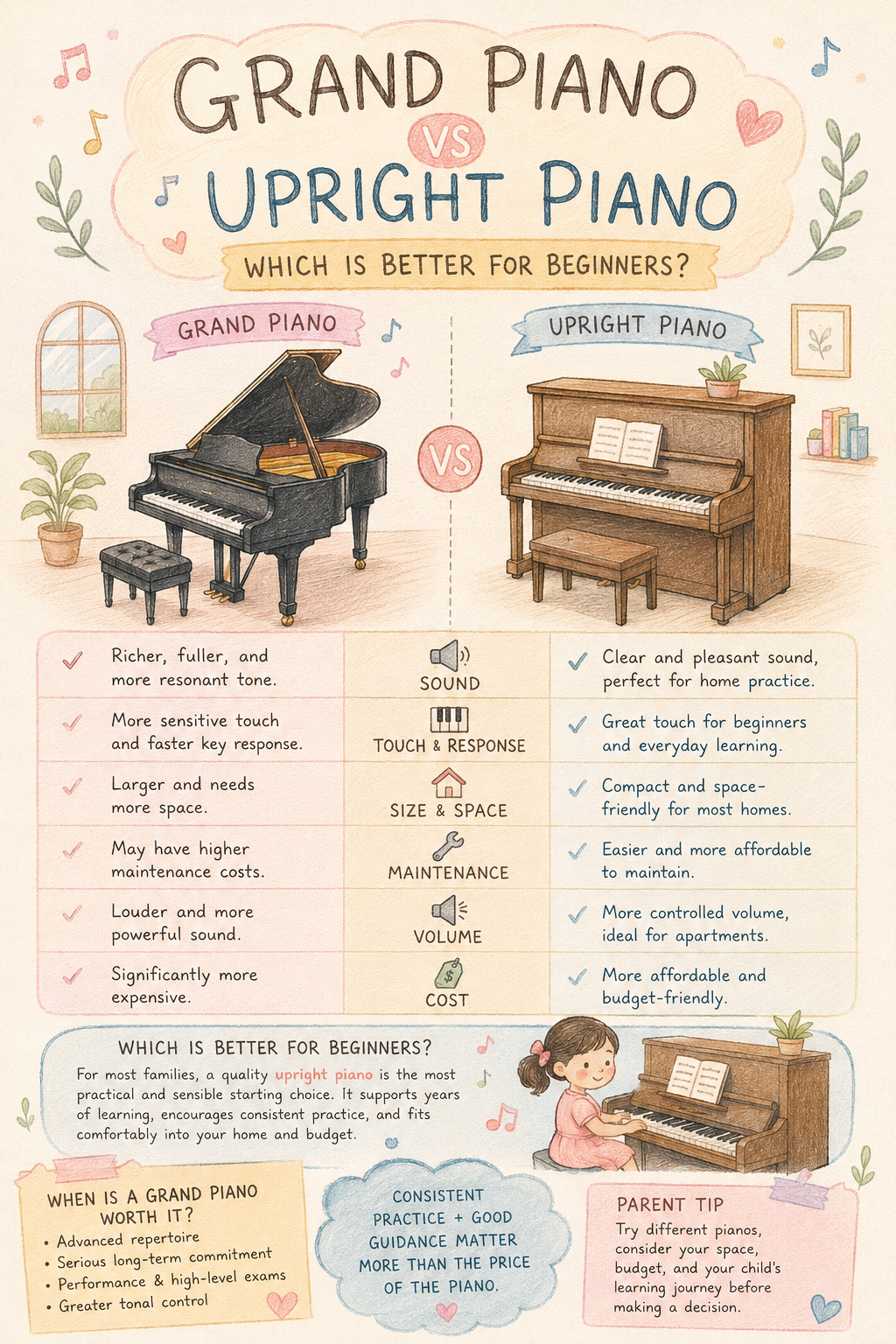
Download free pdf by clicking the poster
Introduction
Choosing a piano for your child can feel overwhelming, especially for families who are new to music lessons.
Many parents wonder:
Should we buy an upright piano or a grand piano?
Is a grand piano always better?
Will an upright piano be enough for long-term learning?
Is it worth spending more at the beginning?
The good news is that both upright and grand pianos can support excellent musical growth when chosen appropriately.
For most beginners, the “best piano” is not necessarily the most expensive one. Instead, it is the instrument that matches your home, budget, and long-term learning goals.
In this guide, we will explore the practical differences between upright and grand pianos in simple terms so parents can make a more confident decision.
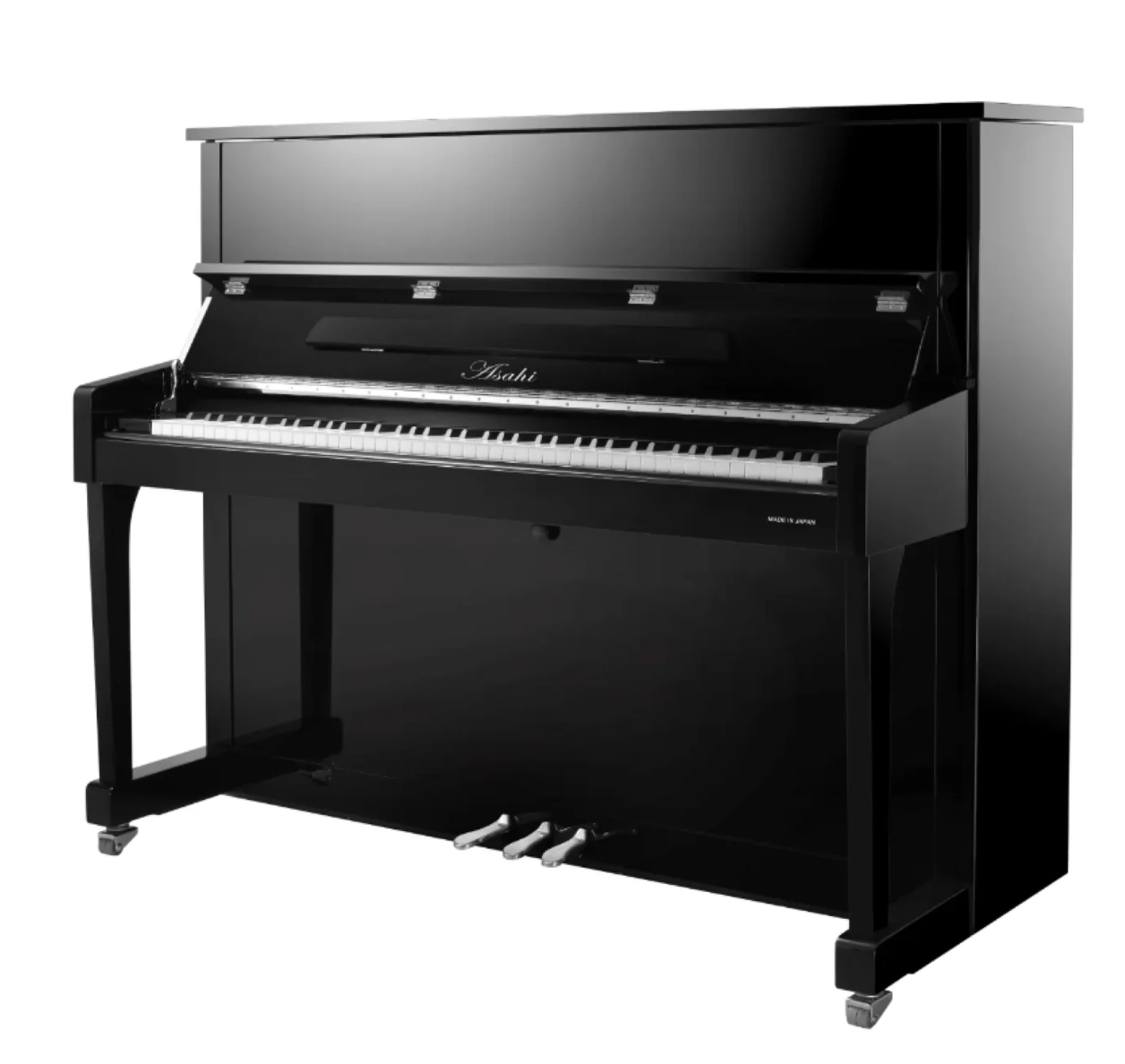
What Is an Upright Piano?
An upright piano is the most common type of piano found in homes, music schools, and studios.
In an upright piano, the strings stand vertically inside the cabinet, which allows the instrument to take up much less floor space compared to a grand piano.
Why Many Families Choose Upright Pianos
One of the biggest advantages of an upright piano is practicality.
For families living in apartments or condominiums in Singapore, space matters. Upright pianos fit more comfortably into smaller living rooms and study areas.
They are also generally more affordable.
Typical upright piano prices can range from a few thousand dollars for entry-level models to significantly more for high-end professional uprights.
Who Is an Upright Piano Suitable For?
An upright piano is often ideal for:
Beginner piano students
Young children starting lessons
Families with limited space
Parents exploring piano lessons for children without making a massive financial commitment initially
Casual and intermediate learners
Modern upright pianos can still provide excellent touch, tone, and musical development when properly maintained.
In fact, many students successfully complete advanced exams on upright pianos.
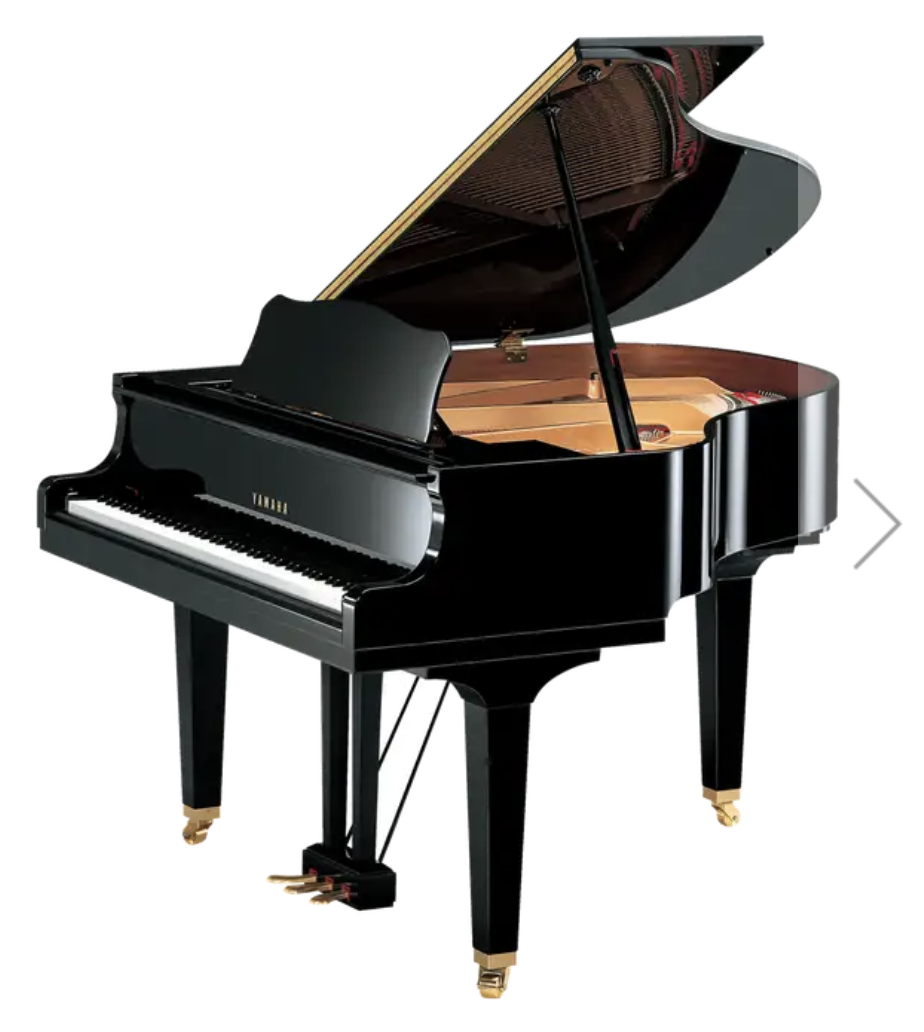
What Is a Grand Piano?
A grand piano is the larger horizontal piano commonly seen in concert halls, schools, and professional performance spaces.
Unlike upright pianos, the strings in a grand piano lie horizontally.
This creates important mechanical differences that affect both sound and keyboard response.
Why Grand Pianos Feel Different
One major difference is how the keys and hammers operate.
Grand pianos generally allow faster repetition, more control, and greater sensitivity in touch. This can help advanced pianists produce a wider range of musical colours and dynamics.
The sound also tends to feel more open and resonant because of the larger soundboard and string length.
Who Is a Grand Piano Suitable For?
Grand pianos are often more suitable for:
Advanced piano students
Serious long-term learners
Students preparing for high-level performance exams
Pianists who perform regularly
Families with sufficient space and budget
However, this does not mean every beginner needs a grand piano.
For many families, a quality upright piano is already more than enough during the early years of learning.
Key Differences Between Grand and Upright Pianos
1. Sound Quality
Grand pianos generally produce a fuller, richer, and more resonant sound.
Because the strings are longer and the soundboard is larger, the tone can feel more powerful and nuanced.
Upright pianos still sound beautiful, especially higher-quality models, but the sound is usually more compact and focused.
For beginners, the difference may not matter very much initially.
For advanced players, however, the additional tonal control of a grand piano becomes more noticeable.
2. Touch and Keyboard Response
This is one of the most important differences.
Grand pianos typically provide:
smoother repetition
more sensitive control
faster key response
This becomes particularly useful in advanced classical repertoire.
Upright pianos can still feel excellent, but the action mechanism naturally behaves differently due to the vertical design.
For beginner piano students, both can work perfectly well.
3. Size and Space Requirements
This is often the deciding factor for many Singapore families.
Grand pianos require significantly more floor space.
They also visually dominate a room much more than upright pianos.
An upright piano is usually easier to fit into:
HDB flats
condominiums
smaller apartments
study rooms
For practical daily living, many parents find upright pianos much easier to manage.
4. Maintenance
Both upright and grand pianos require:
regular tuning
humidity management
periodic servicing
However, grand pianos may sometimes involve higher maintenance costs due to their larger size and more complex regulation requirements.
Singapore’s humid climate also means proper care is important regardless of piano type.
5. Volume
Grand pianos are generally louder and more resonant.
While this can sound wonderful, it may not always be ideal in smaller homes or apartments with nearby neighbours.
Many families actually prefer the more controlled volume of an upright piano for home practice.
6. Cost
Grand pianos are significantly more expensive than upright pianos.
Beyond the purchase price, additional costs may include:
larger moving fees
climate control systems
higher maintenance expenses
For families starting piano lessons Singapore-wide, an upright piano is often the more financially practical option.
7. Long-Term Learning Experience
For beginner and intermediate students, a good upright piano can support years of musical growth.
Eventually, highly advanced students may benefit from transitioning to a grand piano for:
greater tonal control
advanced repertoire
performance preparation
diploma-level playing
But this usually becomes relevant much later in the learning journey.
Which Piano Is Better for Beginners?
For most families, a quality upright piano is usually the most practical and sensible starting choice.
It offers:
good musical development
reasonable cost
space efficiency
sufficient touch and tone for many years of learning
A grand piano is certainly wonderful, but it is not a requirement for successful piano learning.
Many students make excellent progress simply by:
practising consistently
developing good technique
receiving proper guidance from an experienced piano teacher Singapore families trust
At the beginner stage, practice habits matter far more than owning a concert grand piano.
When Is a Grand Piano Worth It?
A grand piano may become worthwhile when a student:
progresses into advanced repertoire
develops serious long-term commitment
prepares for high-level ABRSM or diploma exams
performs regularly
becomes highly sensitive to tonal and touch differences
For advanced pianists, the musical advantages of a grand piano become much more meaningful.
However, it is often wiser for families to upgrade later rather than overspend too early.
Common Mistakes Parents Make When Buying a Piano
Buying the Most Expensive Piano Too Early
Some parents assume a more expensive piano automatically guarantees faster progress.
In reality, consistent practice and good teaching matter far more initially.
Ignoring Space and Lifestyle Practicality
A piano should fit naturally into the family’s daily environment.
Sometimes a smaller upright piano encourages more regular practice simply because it fits comfortably into the home.
Choosing Based Only on Appearance
Beautiful furniture styling is nice, but touch and sound quality matter much more for learning.
Buying Without Trying Different Instruments
Different pianos feel very different.
Whenever possible, families should try multiple instruments before deciding.
Final Thoughts
When comparing upright piano vs grand piano, there is no single “correct” answer for every family.
Both instruments have strengths.
For many beginners, a good upright piano provides an excellent balance of:
musical quality
affordability
practicality
long-term usefulness
Grand pianos offer greater musical refinement, but they are usually most beneficial for serious advanced students.
Most importantly, parents should remember this:
A student with consistent practice habits and proper guidance will usually progress much further than a student with an expensive piano but poor practice routines.
The right piano is ultimately the one that supports enjoyable, sustainable music learning over the long term.
Explore our piano lessons for children and beginner students in Singapore.
